

Spherification and liquid centers
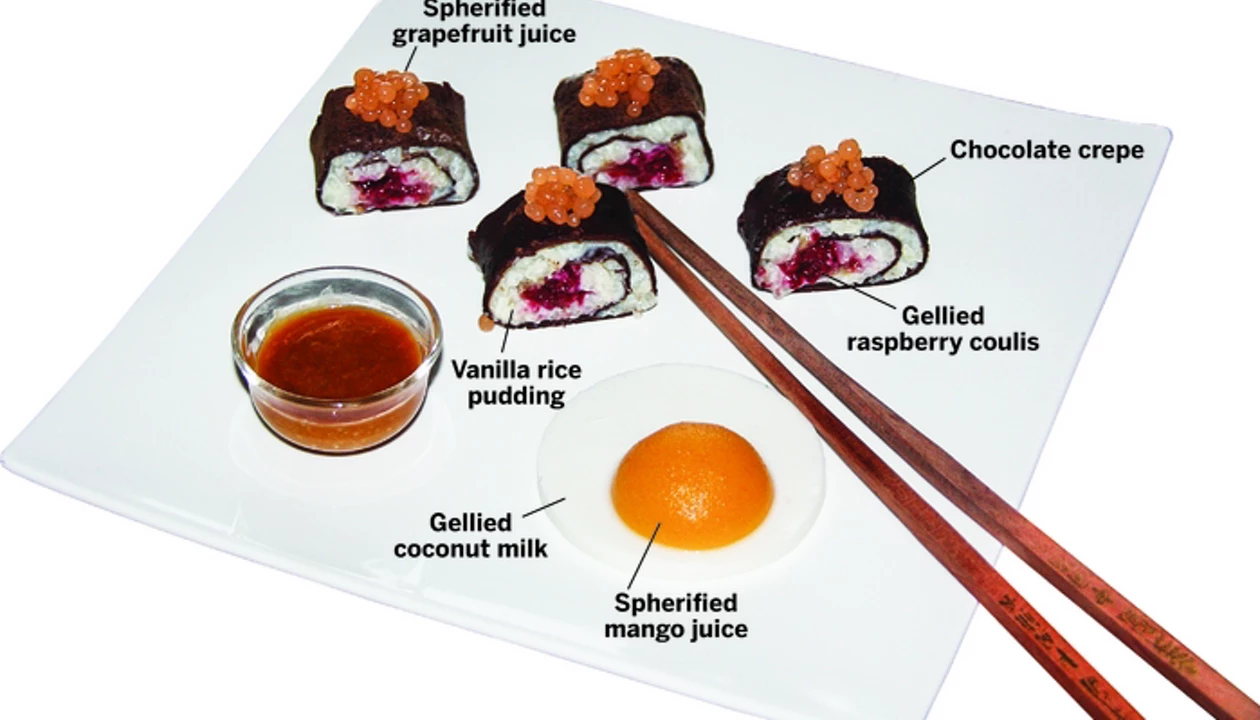
Spherification is perhaps the most recognizable molecular gastronomy technique, and it’s being creatively applied to sushi. The process relies on a reaction between sodium alginate – derived from brown algae – and calcium chloride. When a liquid containing alginate is dripped into a calcium chloride bath, a gel membrane forms around the liquid, creating a sphere with a liquid center.
This creates textures you don't expect. You get soy sauce spheres that pop, or wasabi caviar that releases heat slowly. I've seen chefs put liquid tuna yolks in shells on top of nigiri to change the mouthfeel entirely.
The challenge with spherification in a sushi setting lies in maintaining flavor integrity and preventing the spheres from dissolving too quickly. The delicate balance of salt and acidity in sushi ingredients can affect the gelling process. Chefs need to carefully calibrate the alginate concentration and bath temperature to achieve the desired result. It requires precision and a deep understanding of the chemistry involved.
- Alginate source: Derived from brown algae
- Reaction: Alginate + Calcium Chloride = Gel Membrane
- Soy sauce spheres, wasabi caviar, and liquid tuna yolks
Foams and airs
Foams and airs are another popular application of molecular gastronomy in modern sushi. These light, airy textures are created by incorporating air into a liquid, typically using a stabilizer like lecithin – a phospholipid found in egg yolks and soybeans. The goal is to create a delicate, ephemeral sensation on the palate.
We’re seeing chefs use yuzu foam atop delicate scallop nigiri, the citrus notes adding brightness and a contrasting texture. Dashi air, created by infusing dashi broth with air, is sometimes served alongside a tuna roll, enhancing the savory flavors. The foam isn’t just about texture; it intensifies the aroma of the underlying ingredient.
Most kitchens are ditching nitrous tanks for ultrasonic emulsifiers. They're safer and give you a foam that doesn't collapse before the plate hits the table. You want it to vanish the second it touches your tongue.
Temperature Play: Flash Freezing & Nitro Sushi
Liquid nitrogen, with its incredibly low temperature (-196°C or -321°F), is being used for flash freezing in some high-end sushi restaurants. This rapid freezing minimizes ice crystal formation, preserving the texture and flavor of the fish in a way that traditional freezing methods cannot. It’s particularly effective with delicate ingredients like fatty tuna or sea urchin.
"Nitro sushi" is a dramatic example of this technique. The sushi is served immediately after being frozen, creating a unique textural experience – a fleeting chill followed by the smooth, buttery texture of the fish. Safety is paramount when working with liquid nitrogen, requiring careful handling and proper ventilation.
Beyond liquid nitrogen, chefs are also exploring other temperature contrasts. Serving warm sushi rice with icy-cold fish is a classic example, but some are going further, creating temperature gradients within a single piece of sushi. This interplay of hot and cold adds another layer of complexity to the dining experience.
- Liquid Nitrogen Temperature: -196°C (-321°F)
- Benefits of Flash Freezing: Preserves texture and flavor
- Safety: Requires careful handling and ventilation
Deconstruction & Reconstruction: Beyond the Roll
Molecular gastronomy encourages chefs to question traditional presentations. Deconstruction and reconstruction – taking a dish apart and putting it back together in a new way – is a key element of this approach. In sushi, this means moving beyond the familiar roll and nigiri forms.
We're seeing sushi 'salads,' where the components of a roll are presented as individual elements, allowing diners to experience each flavor separately. Deconstructed nigiri might feature slices of fish, perfectly formed rice, and a sauce presented in a sphere or foam, encouraging diners to assemble their own bite. Some chefs are even transforming rolls into edible sculptures.
Chef Masaki Saito at Sushi Saito in Tokyo, though not exclusively focused on molecular techniques, exemplifies this philosophy by prioritizing the purest expression of each ingredient. His approach—while rooted in tradition—embraces a similar spirit of thoughtful disassembly and re-imagining. It's about challenging expectations and forcing diners to reconsider their understanding of sushi.
Boosting umami
Molecular gastronomy provides tools for intense flavor manipulation, allowing chefs to create novel pairings that enhance the umami of sushi. Enzymatic reactions can be used to break down proteins and release glutamates, the compounds responsible for umami. Flavor encapsulation allows chefs to deliver concentrated bursts of flavor at specific moments.
Examples include truffle-infused soy sauce, where the earthy aroma of truffle complements the savory notes of the soy. Smoked salt air paired with salmon adds a smoky depth that enhances the fish’s richness. Transglutaminase, often called 'meat glue,' is used to bind unusual combinations, like scallop and miso, creating a cohesive texture and flavor profile.
The goal isn’t simply to create unusual flavors, but to elevate the overall umami experience. By carefully controlling the release and perception of flavors, chefs can create a more satisfying and memorable dining experience. It's about layering flavors and textures to create a symphony on the palate.
Edible Films & Powders: New Presentations
Edible films, often made from seaweed extracts or other polysaccharides, are gaining popularity as a way to create new textures and presentations. These films are transparent and can be flavored, adding another dimension to the dining experience. Imagine a sushi roll wrapped in a delicate, citrus-flavored film.
Similarly, powders – created through freeze-drying or spray-drying – can be used to dust nigiri or rolls, adding a concentrated burst of flavor and visual appeal. A dusting of yuzu powder on a piece of salmon nigiri provides a bright, aromatic contrast. These techniques aren’t just about taste; they’re about visual artistry.
I’m particularly interested in how these techniques affect the overall dining experience. The visual element is crucial in sushi, and edible films and powders allow chefs to create stunning presentations that engage all the senses. It’s about crafting a complete sensory experience, not just a delicious meal.
Flavor Pairing Comparison: Traditional vs. Molecular Gastronomy Influenced Sushi
| Pairing | Flavor Profile | Texture | Complexity | Overall Harmony |
|---|---|---|---|---|
| Salmon/Avocado | Mild, buttery | Creamy, soft | Low | High |
| Tuna/Scallion | Clean, savory | Firm, slightly crisp | Low | High |
| Salmon/Truffle | Rich, umami, earthy | Silky, delicate | Medium | Medium |
| Tuna/Smoked Salt | Savory, smoky, oceanic | Firm, subtly textured | Medium | Medium |
| Yellowtail/Yuzu Air | Citrusy, bright, fatty | Light, airy, smooth | Medium | Medium |
| Eel/Black Garlic Puree | Sweet, savory, pungent | Unctuous, smooth | High | Medium |
| Scallop/Wasabi Caviar | Sweet, spicy, briny | Soft, popping | Medium | Medium |
Illustrative comparison based on the article research brief. Verify current pricing, limits, and product details in the official docs before relying on it.
Gels & Jellies: Textural Illusions
Gels and jellies are employed to create unexpected textures in sushi, playing with expectations and offering a sense of surprise. Agar-agar, a seaweed-derived gelling agent, is commonly used to create these textural illusions.
A sake-infused jelly accompanying a piece of fish provides a subtle alcoholic note and a contrasting texture. Seaweed gel, mimicking the texture of uni (sea urchin), can be a surprising and delightful substitute. This is about creating a multi-sensory experience, where texture is as important as taste.
Gels are easy to mess up. If the agar-agar ratio is off, you end up with a rubbery block that ruins the fish. It takes a lot of trial and error to get the snap right.
Standout Chefs & Restaurants: Pushing Boundaries
Several chefs and restaurants are leading the charge in molecular gastronomy sushi, demonstrating the potential of these techniques. Chef Shinji Kanesaka at Sushi Kanesaka in Tokyo is known for his meticulous attention to detail and his willingness to experiment with new flavors and textures.
At Noma in Copenhagen, though not strictly a sushi restaurant, René Redzepi's team has frequently incorporated Japanese techniques and ingredients, often employing molecular gastronomy to create innovative dishes. Their exploration of fermentation and flavor pairing has influenced sushi chefs worldwide.
Also, consider Sugita in Tokyo, where Chef Taku Sugita masterfully blends traditional Edomae techniques with subtle molecular elements. He’s known for his aging process and his innovative use of soy sauce and vinegar. These chefs aren’t simply chasing novelty; they’re using molecular gastronomy to enhance the essence of sushi.
No comments yet. Be the first to share your thoughts!