

Start with the right tools
Building a sushi palate begins with the mechanics of the roll. You cannot taste the balance of vinegar and fish if you are fighting your equipment. The difference between a messy kitchen and a clean, professional-style roll comes down to three specific items: a bamboo mat, a sharp knife, and a rice paddle.
Bamboo Rolling Mat (Makisu)
The bamboo mat is the engine of your sushi making. It provides the tension needed to shape the rice and filling into a tight cylinder. Without it, the roll will be loose, and the ingredients will spill out when sliced. Look for a mat with tight, even slats. If the bamboo is warped or loose, the roll will be uneven.
Sharp Chef’s Knife
A dull knife crushes the rice grains and tears the nori, ruining the texture and presentation. You need a long, sharp blade to make one clean, confident slice through the roll. A standard chef’s knife works, but a dedicated yanagiba (sushi knife) is the professional standard for its length and sharpness. Keep the blade razor-sharp.
Rice Paddle (Shamoji)
Never use a metal spoon to mix sushi rice. The cold metal cools the rice too quickly and can bruise the grains. A wooden or plastic paddle (shamoji) is flat and gentle, allowing you to fold the rice and vinegar together without mashing it. This preserves the fluffy, distinct texture of each grain.
| Tool | Material | Purpose | Substitute |
|---|---|---|---|
| Rolling Mat | Bamboo | Shape and tighten roll | Towel (less effective) |
| Knife | High-carbon steel | Clean slicing | Serrated bread knife |
| Rice Paddle | Wood/Plastic | Mix without crushing | Silicone spatula |


As an Amazon Associate, we may earn from qualifying purchases.
Prep the rice and fish
Building a sushi palate starts with the two pillars of the craft: shari (vinegared rice) and neta (the topping). If either component is off, the entire experience falls apart. The rice provides the structure and tang, while the fish delivers the texture and umami. Getting these right is the foundation of everything else you will roll or plate.
Choose sushi-grade fish
Never compromise on safety when handling raw seafood. Only buy fish explicitly labeled "sushi-grade" or "sashimi-grade" from reputable suppliers who follow strict freezing protocols to kill parasites. If you are unsure about the source, stick to cooked or plant-based alternatives like avocado or cucumber until you can verify the supply chain.
When slicing, keep your knife extremely sharp. A dull blade tears the flesh, ruining the mouthfeel. Slice against the grain to shorten the muscle fibers, making the bite tender rather than chewy. Store your fish on ice until the moment it touches the rice to maintain that pristine, cold texture.
Season the shari
The rice is the soul of sushi. Use short-grain Japanese rice, which is naturally sticky and ideal for holding shapes. Rinse the grains until the water runs clear to remove excess starch, then cook it to a tender but firm consistency. While the rice is still hot, fold in a mixture of rice vinegar, sugar, and salt. Let it cool to body temperature before using; warm rice is easier to handle, but cold rice will ruin the texture of the fish.
Roll the maki correctly
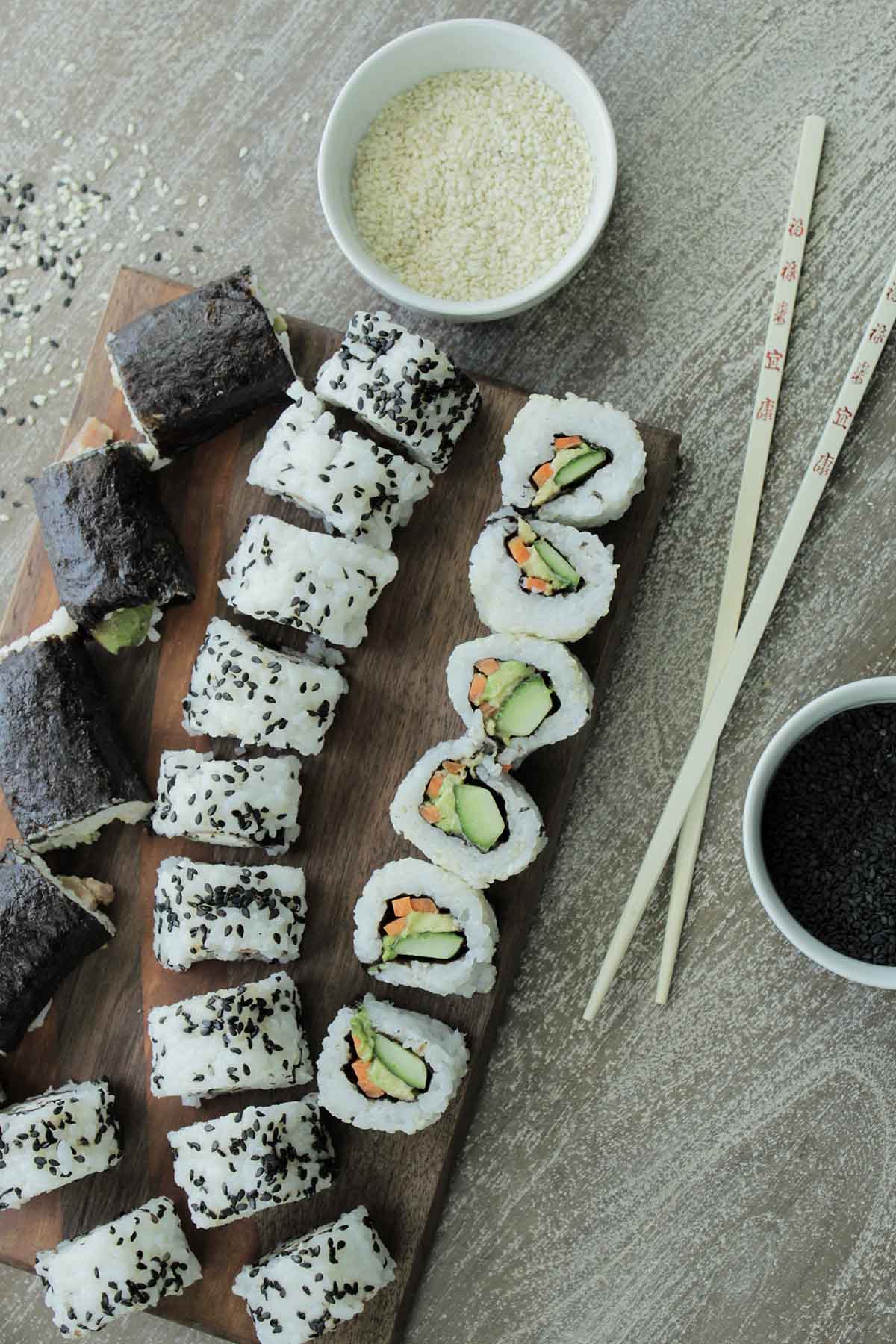
Rolling maki requires a balance of tension and gentleness. The goal is to create a tight cylinder that holds its shape when sliced, without crushing the ingredients inside. Think of the nori sheet as a canvas and the fillings as the paint; if the paint is too heavy, the canvas tears. If the tension is uneven, the canvas wrinkles.
Start with a dry bamboo mat wrapped in plastic wrap to prevent sticking. Place a sheet of nori shiny-side down on the mat. Spread a thin, even layer of sushi rice over the nori, leaving a one-inch strip of bare nori at the far edge. This bare edge acts as the glue for sealing the roll.
Add your fillings in a horizontal line across the center of the rice. Keep the pile low and narrow. Overfilling is the most common mistake beginners make, leading to rolls that burst open or refuse to roll tightly.
Lift the edge of the bamboo mat closest to you. Use your thumbs to hold the fillings in place while your fingers guide the nori and rice over the filling. Tuck the nori tightly against the fillings, creating a initial cylinder. Keep the pressure firm but gentle.
Once the initial tuck is complete, lift the mat slightly off the counter. Roll the mat forward, applying even pressure with your fingers to shape the cylinder into a square or round form. The mat helps distribute pressure evenly, preventing weak spots.
Roll the mat one final time so the bare strip of nori at the far edge meets the body of the roll. Dab a tiny amount of water on the nori to activate the starch and seal the seam. Squeeze the mat gently around the roll to ensure the seam stays closed.
After rolling, let the maki rest for a minute. This allows the nori to set and the rice to firm up slightly, making it easier to slice cleanly. Use a sharp, wet knife to cut the roll into six or eight pieces, wiping the blade between cuts to maintain precision.
Shape nigiri by hand
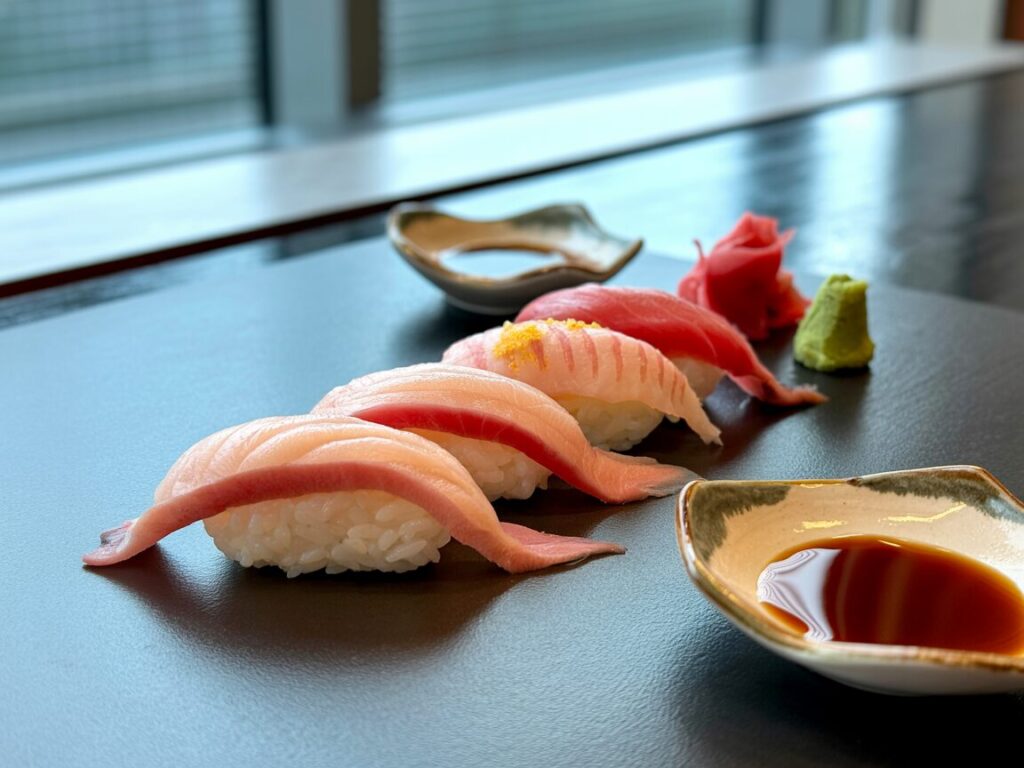
Hand-pressing nigiri is the definitive test of a sushi connoisseur. Unlike rolls, where ingredients are hidden inside a nori wrapper, nigiri displays the fish and rice in their purest form. The shape must be tight enough to hold together, yet loose enough to dissolve on the tongue. It is a balance of tension and tenderness that takes years to master.

Wet your hands with temesui (vinegar-water) to prevent sticking. Scoop a small mound of sushi rice—about the size of a thumb—and gently squeeze it into an oblong shape. Do not pack it tight; you want air pockets that allow the rice to separate easily when eaten.

Take a slice of fish, roughly the same size as your rice mound. Place a tiny dot of wasabi on the underside of the fish. This acts as the glue between the rice and the topping, ensuring the nigiri stays intact without overwhelming the palate with heat.

Hold the rice in your non-dominant hand, cupping it gently. Place the fish on top and use your thumb to press down lightly. Rotate the piece in your hand, using your fingers to mold the rice against the fish, creating a seamless, unified oval shape.
Flip the nigiri over so the fish is facing up. Give it one final, gentle press with your thumb to ensure the rice adheres securely. The final piece should look like a single, cohesive unit, not two separate parts stacked together.
Plate for color and balance
A well-plated sushi set acts like a small landscape, where each piece contributes to a larger composition. The goal is to create visual harmony using the natural colors of the ingredients: the orange of salmon, the white of rice, the green of avocado, and the red of tuna. This contrast makes the dish inviting before the first bite.
Start by arranging the nigiri in a row, ensuring the fish faces the same direction for uniformity. Place maki rolls slightly apart to let their shapes stand out. Use the negative space on the plate to prevent clutter; a crowded plate feels rushed, while a balanced one feels intentional.
Add accents sparingly. A small mound of wasabi and a few slices of pickled ginger (gari) provide necessary color breaks without overwhelming the main pieces. These elements should frame the sushi, not compete with it. The result is a presentation that highlights the quality and freshness of the fish.

Taste and cleanse properly
Eating sushi is a sensory exercise in contrasts. To build a true sushi palate, you must treat each bite as a distinct event rather than a continuous meal. The goal is to appreciate the specific balance of rice, fish, and seasoning without letting flavors bleed into one another.
Start with the basics of the dip. Turn your nigiri sideways and dip only the fish side lightly into the soy sauce. Avoid submerging the rice, as it will absorb too much salt and fall apart. For sashimi, dip the edge of the slice. Never mix wasabi into the soy sauce dish; this masks the delicate flavor of the fish and is generally frowned upon by chefs.
Use the pickled ginger, or gari, as a palate cleanser, not a garnish. Between different types of fish, eat a small slice of ginger to reset your taste buds. This allows you to taste the next piece clearly, just as a sommelier uses water between wine tastings. Finish your meal with green tea to wash away any lingering oil or salt.
-
Dip fish side only, not rice
-
Place wasabi directly on fish, not in sauce
-
Eat ginger between different fish types
-
Drink green tea to finish
Common rolling mistakes
Even experienced chefs encounter rough patches when rolling sushi. The most frequent issue is a loose roll, where the nori fails to hold the rice and fillings together. This usually happens because the bamboo mat isn't applying enough pressure, or the rice layer is too thick. To fix this, dampen your hands before shaping to prevent sticking, and apply firm, even pressure with the mat from the far end toward you.
Another common error is breaking the fish or filling during the cut. If you slice through a roll with a dull knife, the ingredients get crushed instead of cleanly severed. Always use a very sharp, wet knife. Wipe the blade between every cut to keep the nori crisp and the presentation clean. A wet blade also prevents the sticky rice from dragging and tearing the roll apart.
Finally, ensure your nori sheet is oriented correctly with the rough side up. The rough texture helps the rice adhere, while the smooth side provides a polished finish for the final product. If the rice slides off, the nori may be too dry or old. Store nori in an airtight container to maintain its crispness and structural integrity.
No comments yet. Be the first to share your thoughts!