

Start with the right tools
You cannot make perfect rolls without the proper gear. While you might be tempted to use what is already in your kitchen drawer, using the wrong equipment is the fastest way to end up with a sticky, broken mess. Learning how to roll sushi properly begins with understanding that two items are non-negotiable: a sharp knife and a bamboo mat.
The bamboo rolling mat, or makisu, provides the necessary structure to compress the rice and fillings into a tight cylinder. Without it, the nori will tear, and the roll will fall apart the moment you try to slice it. A sharp, high-carbon steel knife is equally critical. A dull blade will crush the delicate rice grains and squish the fillings, ruining the texture and presentation of every piece.

Investing in these specific tools will save you from frustration and ensure your first few attempts look professional. The following items are the standard setup for any home sushi chef.


As an Amazon Associate, we may earn from qualifying purchases.
5 Viral Ingredients for Perfect Rolls
Mastering how to roll sushi starts with selecting the right components, and these five viral ingredients are the secret to perfect, restaurant-quality rolls every time. By focusing on these essential elements, you can elevate your technique and achieve the ideal texture and flavor profile in every bite.
1. Short-Grain Japanese Rice
The foundation of any roll is the rice. You must use short-grain Japanese varieties like Koshihikari or Sushiko. These grains are naturally sticky and glutinous, allowing them to hold together when rolled. Long-grain rices like Basmati or Jasmine will fall apart immediately. Cook the rice with a precise water-to-rice ratio (usually 1:1.1) and season it immediately with a mixture of rice vinegar, sugar, and salt while it is still hot.
2. Nori (Dried Seaweed)
Nori provides the structural integrity and the distinct umami flavor. Look for yaki-nori (roasted sheets) that are dark green, glossy, and crisp. Avoid sheets that are yellowish or brittle, as they indicate age and loss of flavor. Store nori in an airtight container with a silica gel packet to prevent humidity from making it chewy. The rougher side of the sheet should always face up when you spread the rice.
3. Fresh Fish or Vegetables
For traditional maki, freshness is paramount. If using fish, ensure it is labeled "sushi-grade" and has been frozen to specific temperatures to kill parasites. For vegetarian options, crisp vegetables like cucumber, avocado, and carrot provide necessary texture contrasts. Cut all fillings into uniform, matchstick-sized strips (julienne) so they fit neatly inside the roll and provide consistent bites.
4. Japanese Mayonnaise and Spicy Sauce
While not traditional in Japan, spicy mayo is a staple in Western-style rolls. It adds creaminess and heat that balances the plain rice and nori. You can make your own by mixing Kewpie mayonnaise with sriracha or chili oil. This ingredient pairs exceptionally well with cooked proteins like tempura shrimp or crab sticks, adding a rich, savory depth to the roll.
5. Soy Sauce, Wasabi, and Pickled Ginger
These are the essential condiments that complete the sushi experience. Soy sauce adds saltiness, wasabi provides a sharp nasal heat, and pickled ginger (gari) acts as a palate cleanser between different pieces. Serve them in small dipping dishes. Do not dip the rice directly into the soy sauce, as it will absorb too much liquid and disintegrate; instead, flip the roll over and dip only the fish or filling side.
Watch a pro roll sushi
Seeing the technique in motion clarifies what words often miss. A steady hand and the right pressure transform loose ingredients into a tight, uniform roll.

Sushi rolling checklist
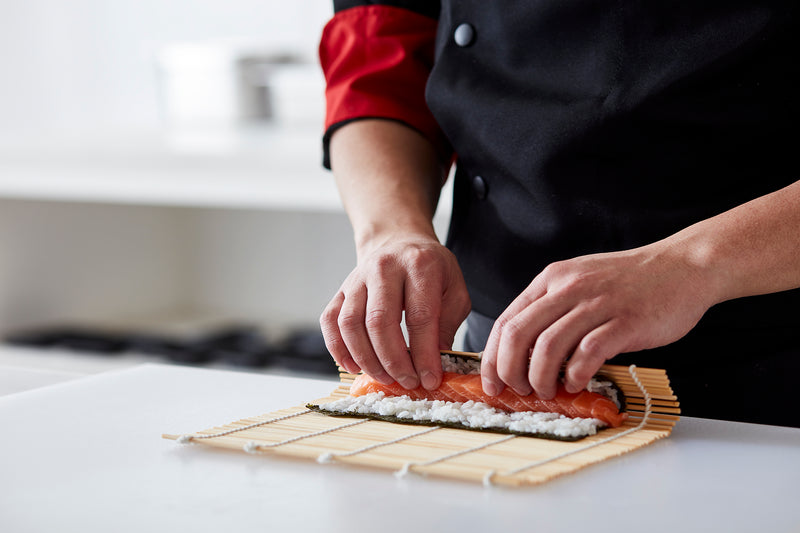
Before you start rolling sushi, a quick prep routine prevents sticky rice and messy cuts. Wrap your bamboo mat in plastic wrap to keep it clean and allow the nori to slide freely. Keep a small bowl of water mixed with a splash of rice vinegar nearby; dipping your fingers prevents the rice from sticking to your hands as you spread it. Ensure your knife is razor-sharp—a dull blade will crush the roll rather than slice it cleanly. Having your filling ingredients sliced into uniform, matchstick-sized strips makes assembly much faster and ensures every bite has the right balance.
Prep steps
- Soak sushi rice for 30 minutes, then cook and season with rice vinegar, sugar, and salt.
- Lay the nori sheet shiny-side down on the bamboo mat.
- Spread a thin, even layer of rice, leaving a 1-inch border at the top.
- Place fillings in a line across the center of the rice.
- Roll tightly using the mat, applying even pressure from the bottom up.
- Seal the edge with a damp finger or a dab of rice paste.
- Slice the roll into six or eight pieces with a sharp, wet knife.
Sushi rolling: what to check next
Even with the right ingredients, technique gaps can ruin a roll. Here are answers to the most common hurdles, from rice texture to knife maintenance.
No comments yet. Be the first to share your thoughts!