

Essential tools and ingredients
You don’t need a professional kitchen to start rolling sushi, but you do need the right gear. Trying to roll sushi with a dull knife or a slippery counter is a recipe for frustration. The difference between a messy first attempt and a clean roll usually comes down to preparation. Gather these specific items before you begin.
The bamboo rolling mat (makisu)
A bamboo mat is the backbone of traditional sushi rolling. It provides the structure needed to compress the rice and fillings into a tight cylinder. Without it, the nori will likely tear or the roll will fall apart. Wrap the mat in plastic wrap before use to keep the bamboo clean and prevent rice grains from getting stuck in the slats. This simple step makes cleanup instant and keeps the mat from absorbing fish odors.
A sharp sushi knife
Standard kitchen knives tend to crush the roll rather than slice through it. A sharp, single-bevel sushi knife (yanagiba) or a very sharp chef’s knife is essential for clean cuts. Dull edges mash the rice, making the inside look messy. Keep the blade wet while cutting to prevent sticking. Slice with a gentle sawing motion, letting the sharp edge do the work.
Sushi-grade fish and rice
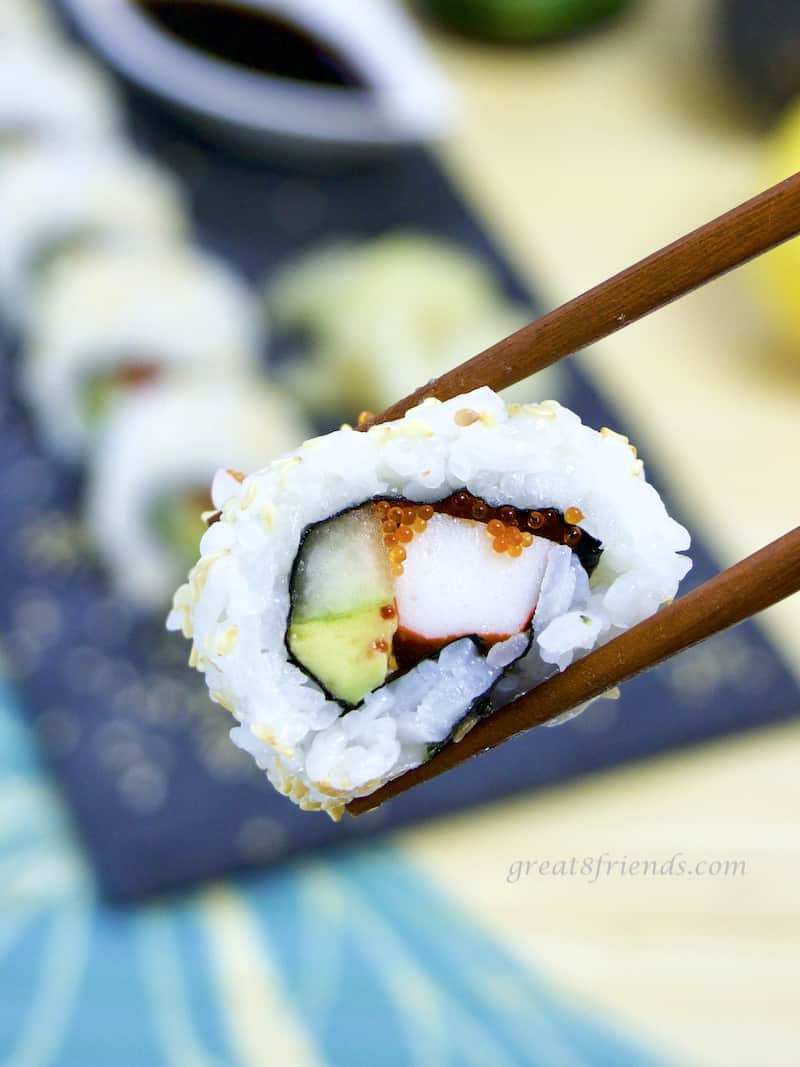
Quality ingredients matter most. For fish, look for labels explicitly marked "sushi-grade" or "sashimi-grade," which indicates the fish has been frozen to kill parasites. If you are avoiding raw fish, stick to cooked options like shrimp, crab, or smoked salmon. The rice is the foundation: use short-grain Japanese sushi rice and season it with a mix of rice vinegar, sugar, and salt. Do not use long-grain rice; it lacks the sticky texture needed to hold the roll together.
Other essentials
- Nori sheets: Look for dry, crisp sheets. Store them in an airtight container to maintain texture.
- Bowl of water with vinegar: Dip your hands in this mixture before handling rice to prevent sticking.
- Sharp scissors: Useful for trimming nori or cutting fillings if a knife isn't handy.


As an Amazon Associate, we may earn from qualifying purchases.
Season and cool the rice
Sushi rice is the foundation of every roll. If the rice is too hot, it wilts the nori and becomes gummy. If it’s too cold or sticky, it won’t hold together when you roll. Getting the texture right here saves you from frustration later.
Start by cooking short-grain Japanese rice until it’s tender but still has a slight bite. While it cooks, prepare the seasoning mix: a combination of rice vinegar, sugar, and salt. Once the rice is done, transfer it to a wide, shallow bowl—wooden hangiri is traditional, but a large glass or ceramic bowl works just as well. The wide surface area helps the rice cool faster and absorb the seasoning evenly.
Pour the vinegar mixture over the hot rice. Use a rice paddle or a spatula to cut and fold the rice gently. Do not stir or mash it, which breaks the grains and makes the texture mushy. You want each grain to be coated and glossy, not clumped together.
While you’re folding, fan the rice to speed up the cooling process. This mimics the traditional method and helps the rice reach room temperature quickly. The goal is for the rice to shine and feel cool to the touch, but not cold. Once it’s at room temperature, cover it with a damp cloth to keep it from drying out until you’re ready to roll.
Rolling traditional maki sushi
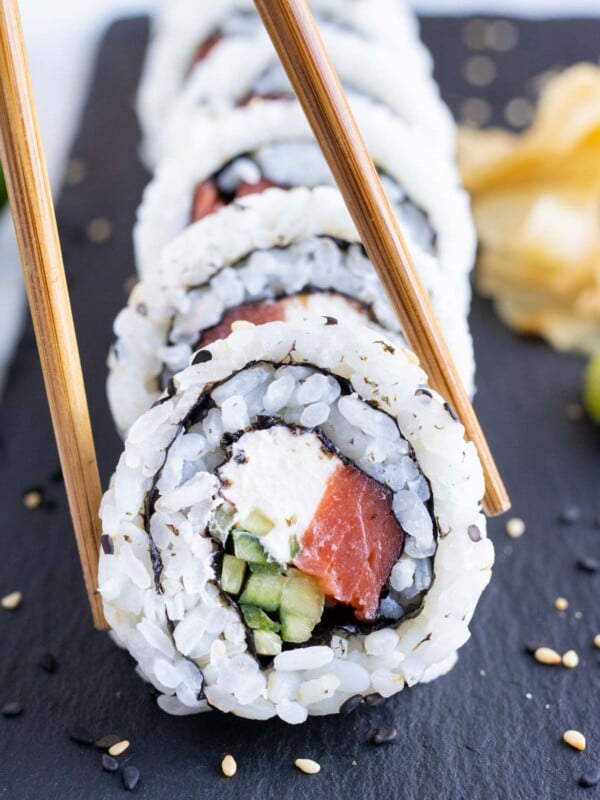
Traditional maki places the nori on the outside, creating a crisp, seaweed-wrapped cylinder. This method is the standard for rolls like cucumber maki or salmon maki. The key to a clean roll is tension: you must roll tightly enough to hold the shape, but gently enough not to crush the fillings.
Wrap your bamboo sushi mat in plastic wrap. This prevents rice from sticking to the wood and makes cleanup instant. Place a sheet of nori on the mat, shiny side down. The rougher side holds the rice better.
Wet your hands to stop the rice from sticking. Place a ball of sushi rice in the center and spread it into an even layer. Leave about one inch of nori exposed at the top edge; this is the seal. The rice should be thin—about a quarter-inch thick.
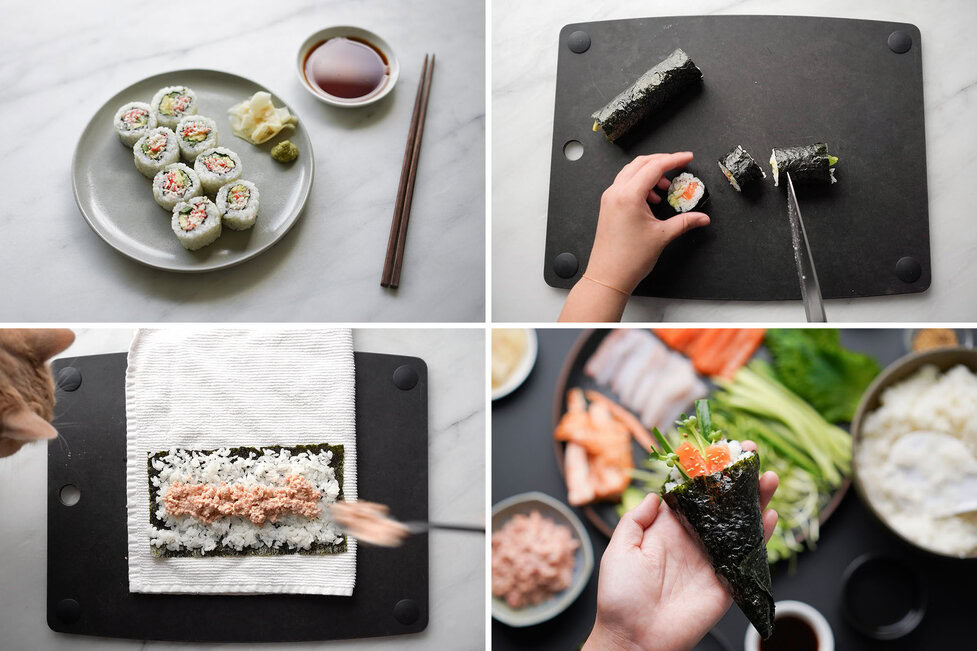
Lay your fillings (cucumber, avocado, crab, or fish) in a horizontal line across the center of the rice. Don’t overstuff; too many ingredients will cause the roll to burst. Keep the line narrow so the roll stays cylindrical.
Lift the edge of the mat closest to you. Tuck it over the fillings, squeezing gently to form a tight cylinder. Use your fingers to hold the fillings in place while you complete the roll. Continue rolling forward, keeping the mat tight against the sushi.
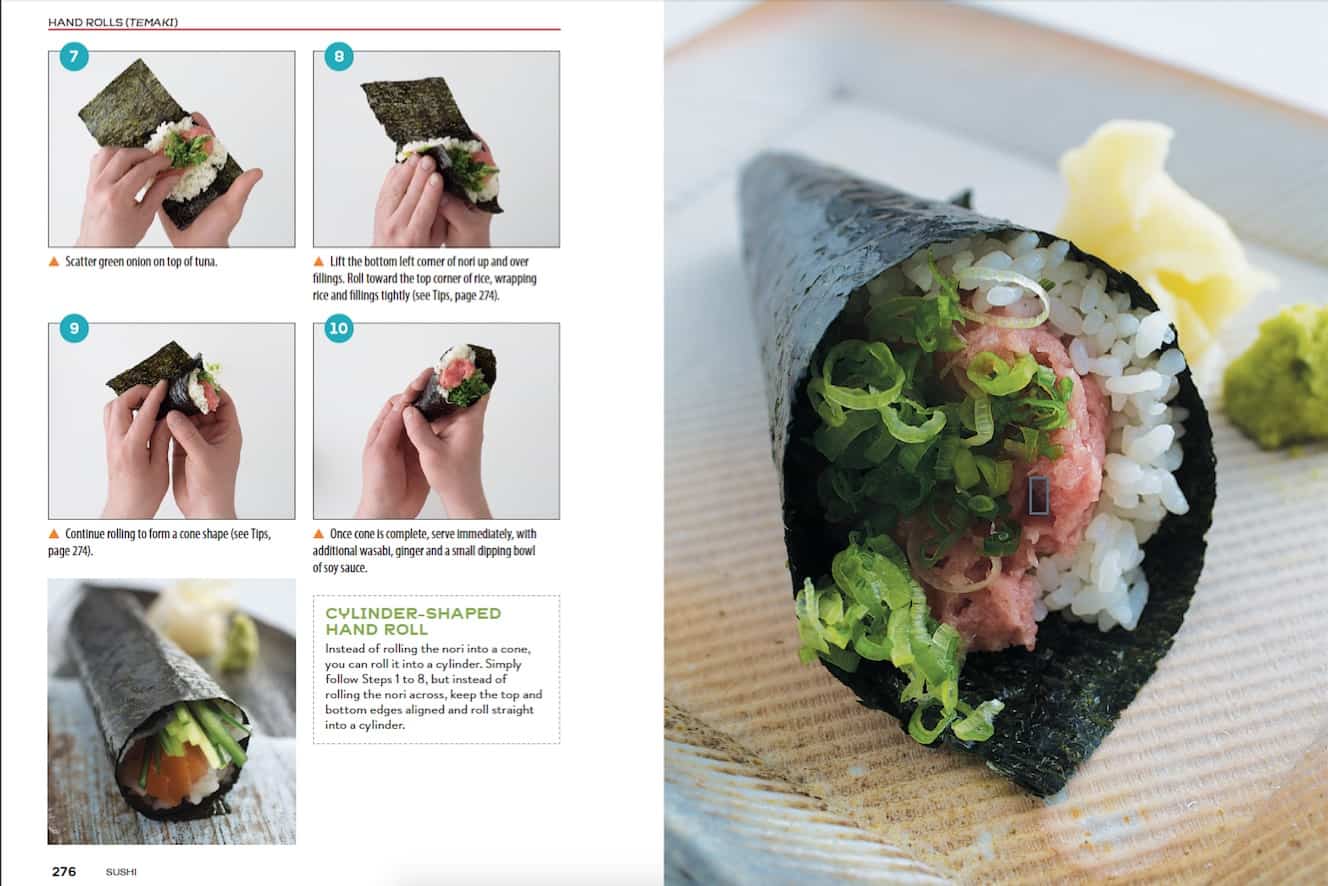
Once the roll is complete, the exposed nori edge should touch the rice to seal it. If it’s dry, add a tiny drop of water. Squeeze the entire roll gently with the mat to firm up the shape. Let it rest for a minute before cutting.
Cutting the roll requires a sharp, wet knife. Slice the roll in half first, then align the halves and cut each into three or four pieces. Wipe the knife between cuts for clean edges.
Making Inside-Out Uramaki Rolls
Uramaki, or inside-out rolls, flip the traditional structure so the rice sits on the outside and the nori wraps the fillings. This style is famous for California rolls and spicy tuna rolls, but the technique requires a bit more handling than standard maki. The goal is to keep the rice intact while flipping the sheet without tearing the seaweed.
Place a sheet of nori shiny-side down on your bamboo mat. Wet your hands to prevent sticking, then take about one cup of sushi rice. Spread it evenly across the entire surface of the nori, leaving a half-inch border at the top edge. Press gently but firmly to create a compact layer that holds together.
Lift the bamboo mat with the nori and rice. Carefully flip the entire assembly over so the rice faces down against the mat. The nori should now be facing up. This is the moment where the rice must adhere well; if it crumbles, your rice was too dry or you pressed too hard.
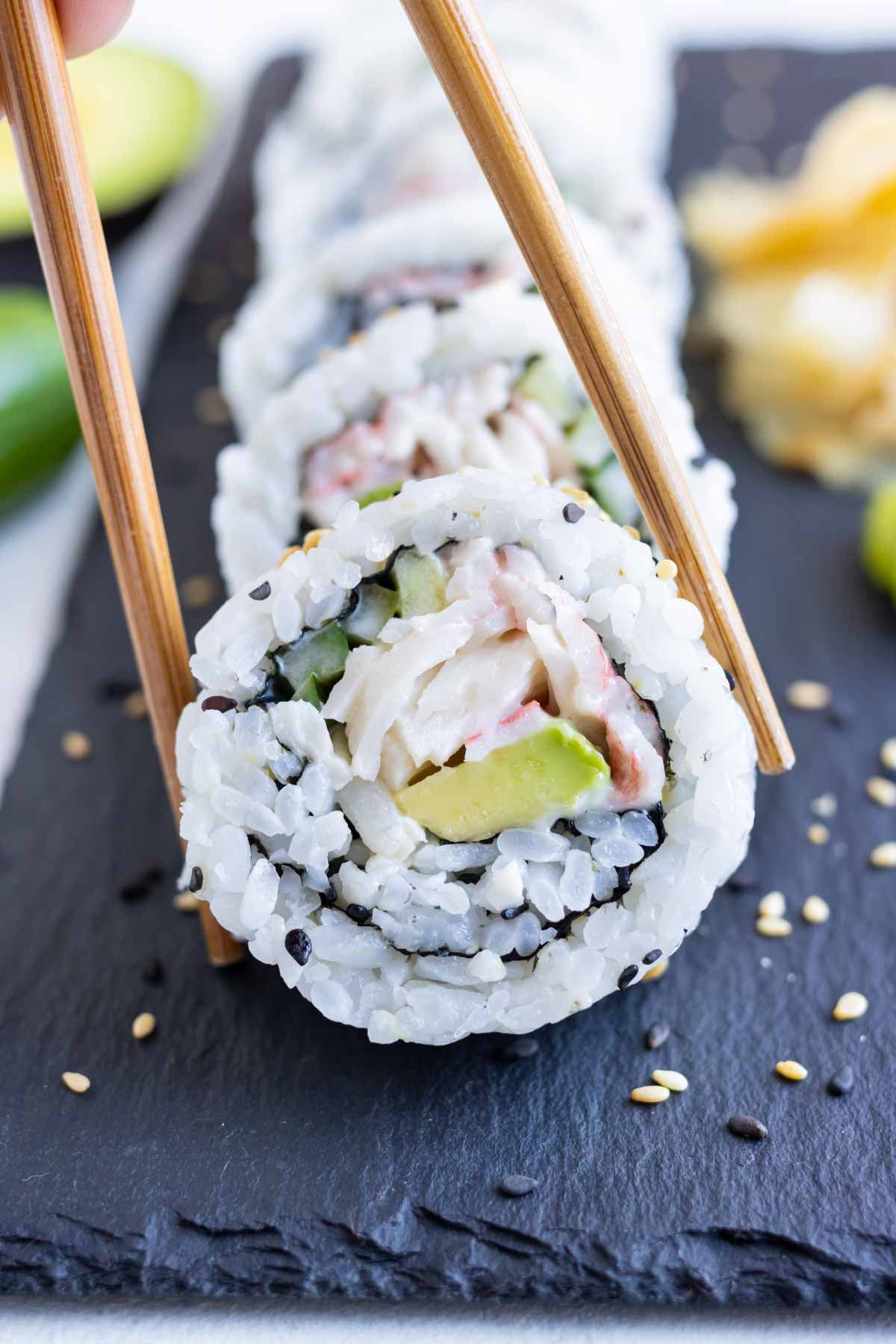
Place your fillings—such as avocado, cucumber, or cooked shrimp—across the center of the nori sheet. Keep the pile low and centered to ensure the roll closes tightly. Overfilling is the most common cause of uramaki bursts during rolling.
Lift the edge of the bamboo mat closest to you. Fold it over the fillings, using the mat to guide the nori around the ingredients. Tuck the nori edge under the fillings to seal it. Continue rolling forward, applying even pressure with your fingers through the mat to create a tight, uniform cylinder.
Once rolled, use the mat to squeeze the roll into a neat shape. Run a sharp, wet knife through the roll to divide it into six or eight pieces. Wipe the knife between cuts to keep the rice clean and the edges sharp.
Slice and serve your sushi
Use a very sharp knife to cut your rolls. A dull blade will crush the rice and tear the nori. Dip your blade in water or wipe it with a wet cloth between every single cut. This prevents the sticky rice from clinging to the metal, ensuring clean edges.
Cut the roll in half first, then line up the halves and slice each one into six or eight pieces. For a sharper cut, use a gentle sawing motion rather than pressing down hard.
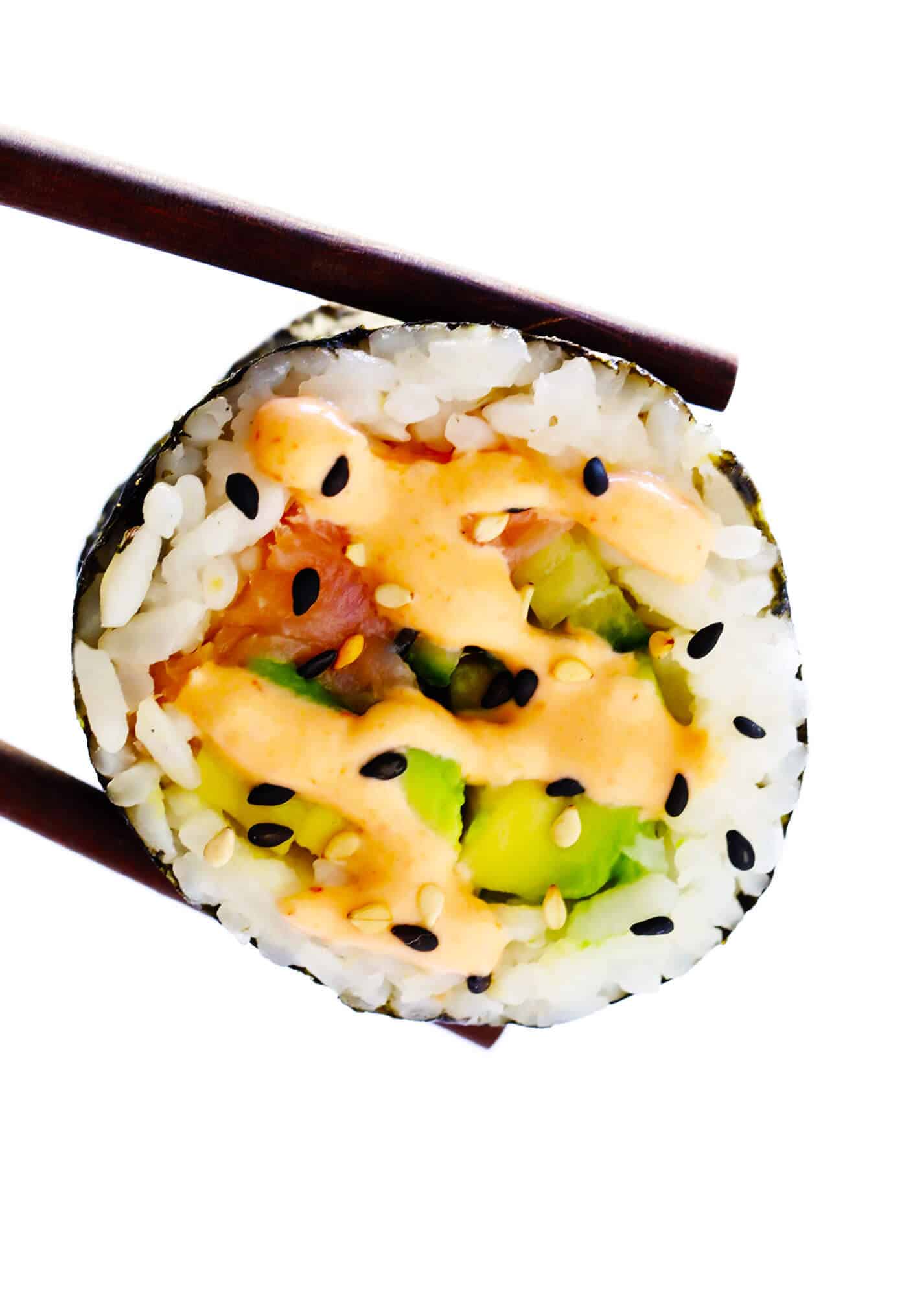
Arrange the pieces on a plate and serve immediately. Traditional accompaniments include soy sauce, pickled ginger, and wasabi. You can also drizzle a little spicy mayo or eel sauce over the top for extra flavor.
Common rolling mistakes to avoid
Even experienced home cooks hit snags when rolling sushi for the first time. The most frequent culprit is loose rice. If your roll falls apart, you likely didn’t press hard enough with the mat. Treat the bamboo mat like a vice; squeeze firmly from the center outward to compact the ingredients. A tight roll holds its shape when sliced.
Another common issue is soggy nori. This happens when the seaweed sits too long against wet rice before rolling. Keep your workspace organized and roll immediately after spreading the rice. If the nori feels leathery or soft before you start, it’s past its prime and should be replaced.
Finally, uneven slicing ruins the presentation. Use a sharp, wet knife to cut through the roll in one clean motion. Sawing back and forth compresses the rice and makes the pieces look messy. Wipe the blade between cuts to keep everything neat.
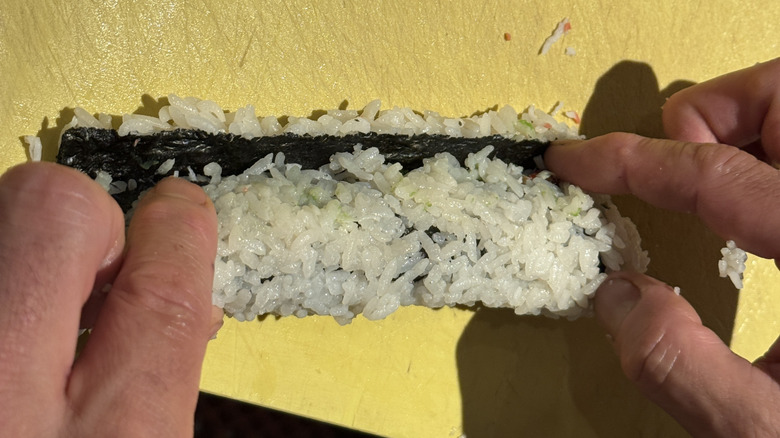
Frequently asked: what to check next
Your sushi rolling checklist
Before you start, gather your tools and ingredients. Having everything within arm’s reach keeps the rice from drying out and the process smooth.
- Bamboo rolling mat (makisu)
- Plastic wrap (for the mat)
- Sharp sushi knife or chef’s knife
- Bowl of water with vinegar (for fingers)
- Sushi rice (seasoned and cooled)
- Nori sheets
- Fillings (fish, vegetables, avocado)
- Soy sauce, wasabi, and pickled ginger
This setup ensures you can focus on technique rather than hunting for supplies mid-roll.
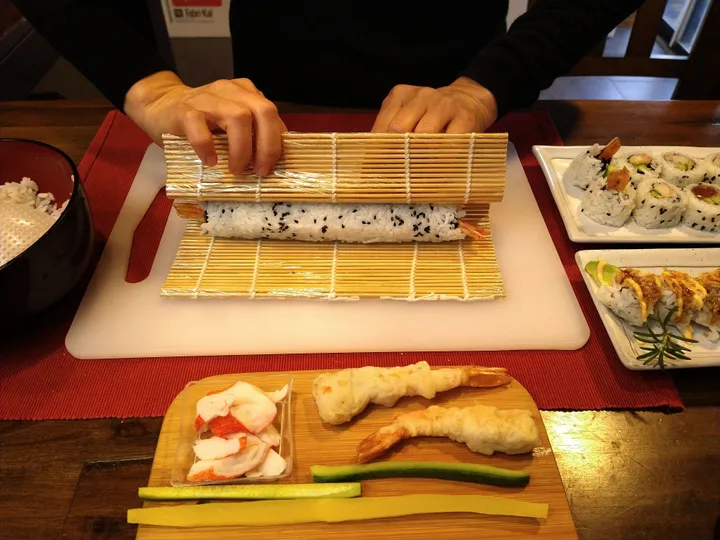
No comments yet. Be the first to share your thoughts!