

Why vegan sushi trains your palate
The 2026 sushi revolution shifts focus from exotic ingredients to the foundational craft of rice. Removing fish strips away the strongest flavor, forcing you to listen to the rice, the vinegar, and the vegetables. This builds a sharper, more refined sushi palate.
Most people think sushi is about the fish. It isn’t. Fish is just the canvas. The real foundation is the rice—how it’s seasoned, how it sticks, and how it feels on the tongue. When you remove the fish, you remove the distraction. You can finally hear what the rice is saying. You notice the balance of salt, sugar, and vinegar. You feel the texture of the shari (sushi rice) against the nori. You taste the crunch of the cucumber or the earthiness of the avocado.
This is why vegan sushi is the best way to learn. It trains your tongue to detect nuance. Once you can taste the vinegar in plain rice, you can taste it in a salmon roll, too. You stop eating for the protein and start eating for the craft.
Choose the right sushi ingredients
Building a sushi palate begins with recognizing how texture and umami interact. When you select ingredients, you are training your palate to distinguish between the sharpness of vinegar, the silkiness of rice, and the distinct mouthfeel of the filling. This section focuses on vegan substitutes that mimic the structural integrity and savory depth of traditional omakase.
The goal is to find plant-based items that hold up to the rolling process while delivering a clean, distinct flavor. A good vegan sushi filling should not be mushy or watery; it should provide resistance against the teeth, similar to how fatty tuna or fresh cucumber functions in a classic roll.
Compare textures and flavors
The table below outlines the sensory profiles of common vegan sushi ingredients. Use this to understand which components contribute to the "sushi palate" experience you are trying to build.
| Ingredient | Texture | Flavor Profile | Best Pairing |
|---|---|---|---|
| Marinated Tofu | Firm, slight give | Savory, umami-rich | Soy sauce, scallions |
| Avocado | Creamy, buttery | Mild, nutty | Cucumber, spicy mayo |
| Cucumber | Crisp, watery | Fresh, clean | Rice, ginger |
| Shiitake Mushroom | Chewy, meaty | Earthy, deep umami | Teriyaki glaze |
Start by tasting the rice alone. Then, take a bite of the filling. Finally, eat the roll. Notice how the acidity of the rice cuts through the richness of the avocado or the earthiness of the mushroom. This sequence is how you develop the palate. Without this deliberate tasting, you are just eating a sandwich wrapped in seaweed. With it, you are training your senses to appreciate the balance of flavors that defines high-quality sushi.
Prepare the sushi rice correctly
Building a sushi palate starts with the rice. The rice is the foundation of every roll and nigiri. Without properly seasoned rice, the delicate flavors of fresh fish and vegetables are lost. You will not taste the quality of your ingredients if the base is flawed.
The process requires patience. You must wash the rice until the water runs clear. This removes excess starch that makes the rice gummy. Gummy rice clumps together and ruins the texture of your sushi. Cook the rice with the correct water ratio. Season it immediately while hot. Let it cool to room temperature before handling.
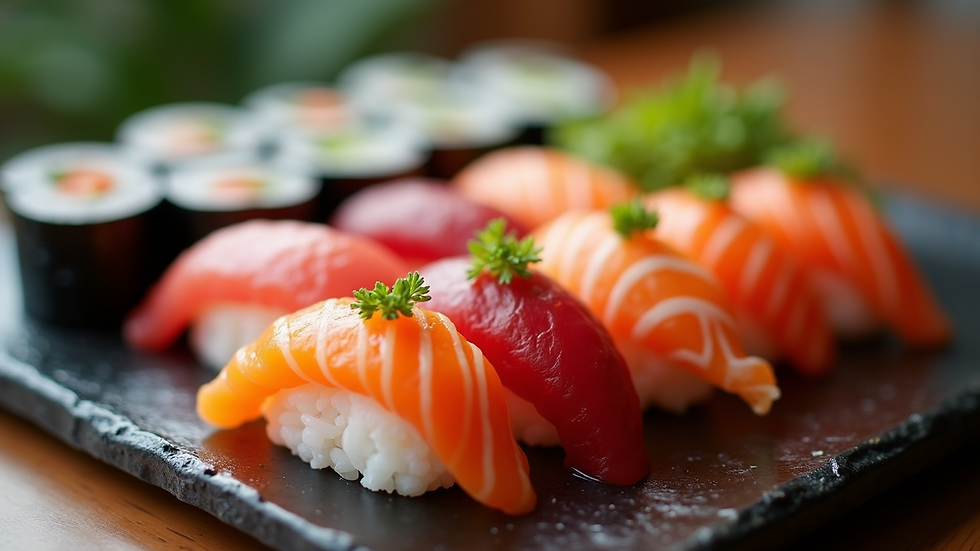
Place short-grain Japanese rice in a large bowl. Cover with cold water and swirl gently with your hand. Drain the cloudy water. Repeat this process five to seven times. Stop when the water is nearly clear. This step removes surface starch and ensures the grains remain separate and tender.
Transfer the rinsed rice to a rice cooker or heavy-bottomed pot. Add water using a 1:1.1 ratio (rice to water). Let the rice soak for thirty minutes before cooking. This allows the grains to absorb water evenly. Cook until the water is fully absorbed. Do not lift the lid during cooking. Let the rice rest for ten minutes after cooking to finish steaming.
Mix rice vinegar, sugar, and salt in a small saucepan. Heat gently until dissolved. Do not boil. Transfer the hot rice to a wide wooden bowl or non-metallic container. Drizzle the seasoning mixture over the rice. Use a cutting motion with a rice paddle to mix. Fan the rice while mixing to cool it quickly. This gives the rice a glossy finish and sharp flavor.
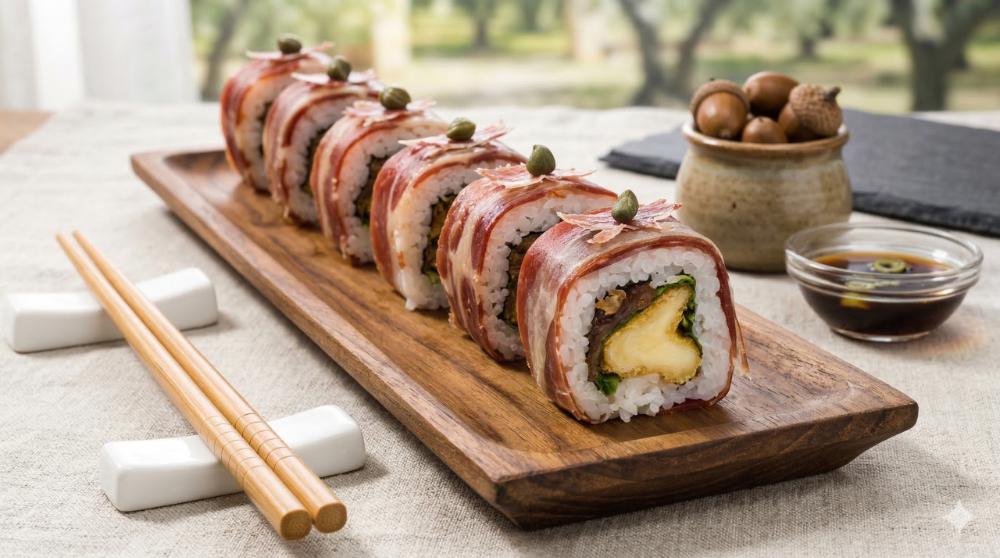
Cover the rice with a damp cloth to prevent it from drying out. Let it cool to room temperature. Do not refrigerate sushi rice. Cold rice becomes hard and loses its sticky texture. Use the rice within four hours for the best flavor and texture. Discard any leftover rice that has been sitting out too long.
The way you handle the rice after cooking matters just as much as the cooking itself. Overmixing makes the rice mushy. Undermixing leaves the seasoning uneven. The goal is sticky, separate grains that hold together when pressed. This texture allows you to taste the fish and toppings clearly. It is the blank canvas for your sushi palate.
Roll your first vegan omakase
Building a sushi palate starts with understanding how texture and temperature interact. When you assemble a roll, you are creating a single unit that delivers a balanced bite. The goal is structural integrity: the rice holds the ingredients, but the nori provides the snap. Speed is the enemy here. Moving slowly allows you to feel the resistance of the rice and adjust the pressure before the roll is sealed.
Prepare the nori and rice
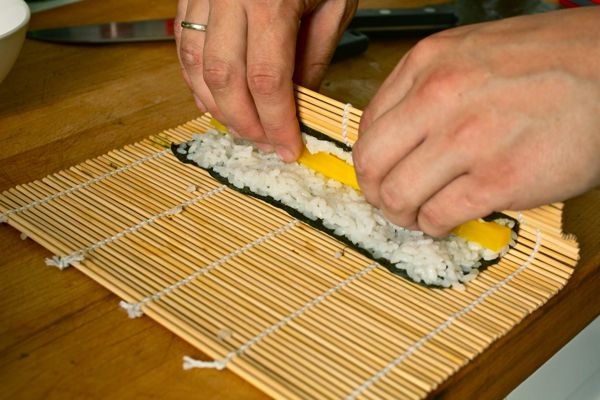
Place a sheet of nori on your bamboo mat (makisu), shiny side down. Spread a thin, even layer of sushi rice over the bottom two-thirds of the sheet. Leave a one-inch border at the top. This empty space is where you will seal the roll. Do not press the rice down hard; you want it to remain airy. If the rice is too dense, the roll will feel heavy and gummy rather than light and fresh.
Add your fillings
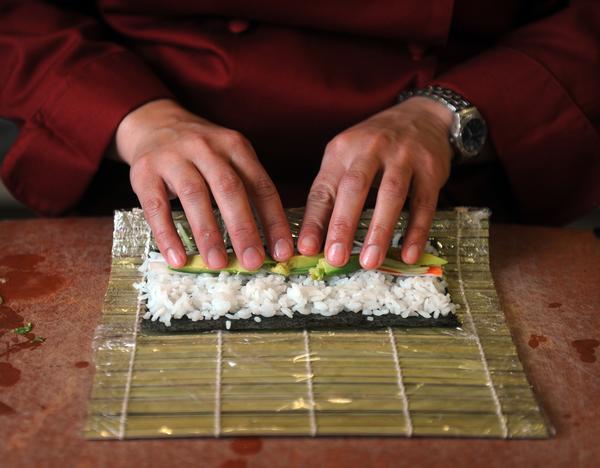
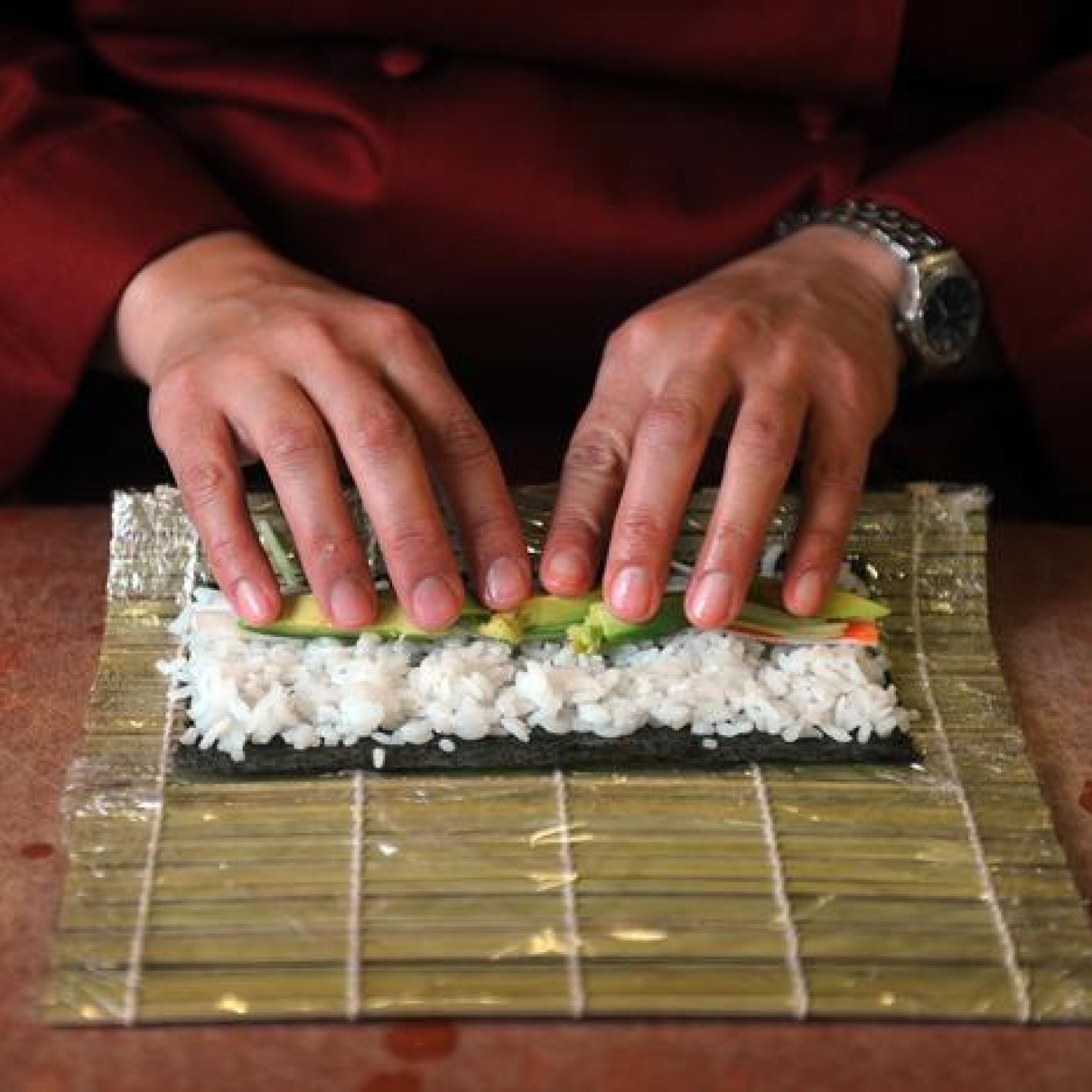
Lay your vegan fillings—such as avocado, cucumber, or pickled daikon—in a horizontal line across the center of the rice. Keep the pile low. Overfilling is the most common mistake beginners make. If the roll is too thick, the nori will tear when you try to roll it, and the flavors will be unbalanced. You want each bite to contain a mix of rice, nori, and filling, not just one ingredient.
The rolling technique
Lift the edge of the bamboo mat closest to you. Use your thumbs to hold the fillings in place while your fingers guide the mat over the rice. Roll tightly but gently. Apply even pressure along the length of the roll to compact the rice without crushing the fillings. Once you reach the bare nori border, brush a small amount of water along the edge to act as glue. Finish the roll by giving it a final squeeze to set the shape.
Slice and serve
Let the roll rest for a minute to allow the rice to settle. Use a sharp, wet knife to slice the roll into six or eight pieces. Wipe the knife between cuts to prevent the rice from sticking. Serve immediately to enjoy the contrast between the crisp nori and the soft rice.
Fix common rolling mistakes
Even with a well-trained sushi palate, structural errors in the roll can distract from the flavor. A soggy nori sheet or an uneven cut changes the mouthfeel, masking the delicate balance of rice and fish. Addressing these technical hiccups ensures that every bite delivers the intended taste profile without interference.
Wet your hands before touching rice
Rice sticks to dry skin, leading to clumps that tear the nori or create uneven layers. Keep a small bowl of water nearby to wet your fingers before handling the shari. This simple step allows the rice to slide smoothly onto the sheet, maintaining an even distribution. It also prevents the rice from drying out, preserving its texture for the final roll.
Keep the nori dry and crisp
Soggy nori is often caused by moisture from the rice or fillings seeping into the seaweed too quickly. Ensure the nori is stored in an airtight container until use. When rolling, avoid placing wet ingredients like cucumber or tomato directly against the nori without a barrier of rice. A dry, crisp sheet provides the necessary snap that contrasts with the soft rice and fish.
Cut with a sharp, wet knife
Uneven cuts result from dull blades or dry knives that squish the roll rather than slicing through it. Use a sharp knife and wipe it with a damp cloth between cuts. This prevents the rice from sticking to the blade and ensures clean, uniform pieces. Uniform cuts allow each piece to hold its shape, presenting the ingredients clearly and evenly.
Tighten the roll for structure
A loose roll falls apart, exposing the filling and altering the eating experience. Roll the bamboo mat firmly but gently, applying even pressure along the length of the sushi. This compacts the rice and fillings, creating a cohesive cylinder that holds together when sliced. A tight roll ensures that each bite contains all the components in the correct ratio.
Taste and cleanse your palate
Eating sushi is a rhythmic experience where each piece should hit your senses with distinct clarity. If you eat piece after piece without a break, the rich oils of the fish and the vinegar in the rice will blur together, muting the subtle flavors you worked so hard to develop. This is where the palate cleanse comes in.
Pickled ginger, or gari, is the traditional tool for this reset. It is not meant to be eaten alongside the fish, but rather as a bridge between pieces. A small slice of ginger scrubs the tongue clean of lingering soy sauce and previous flavors, returning your taste buds to a neutral state. Think of it like wiping a chalkboard before writing a new lesson; without it, the new information just smears over the old.
To use it correctly, take a small bite of the ginger, chew it briefly, and swallow. Wait a moment for the sharp, sweet acidity to clear your mouth before reaching for the next piece of nigiri or sashimi. This pause allows you to appreciate each component of the sushi individually, ensuring that the delicate sweetness of the tuna isn't overshadowed by the previous bite of rich salmon.
Vegan sushi prep checklist
Build a clean sushi palate by organizing your station before you start. This setup ensures you can focus on technique and taste perception without scrambling for ingredients.
Tools
- Sharp knife: A single-bevel or high-carbon steel knife makes clean cuts without crushing the roll.
- Bamboo mat (makisu): Essential for shaping tight, uniform rolls.
- Spoon: Use a rice paddle or wet spoon to handle sticky sushi rice.
- Bowl of water: Keep hands wet to prevent rice from sticking to your skin.
Ingredients
- Sushi rice: Short-grain Japanese rice seasoned with vinegar, sugar, and salt.
- Nori sheets: Dried seaweed sheets for wrapping.
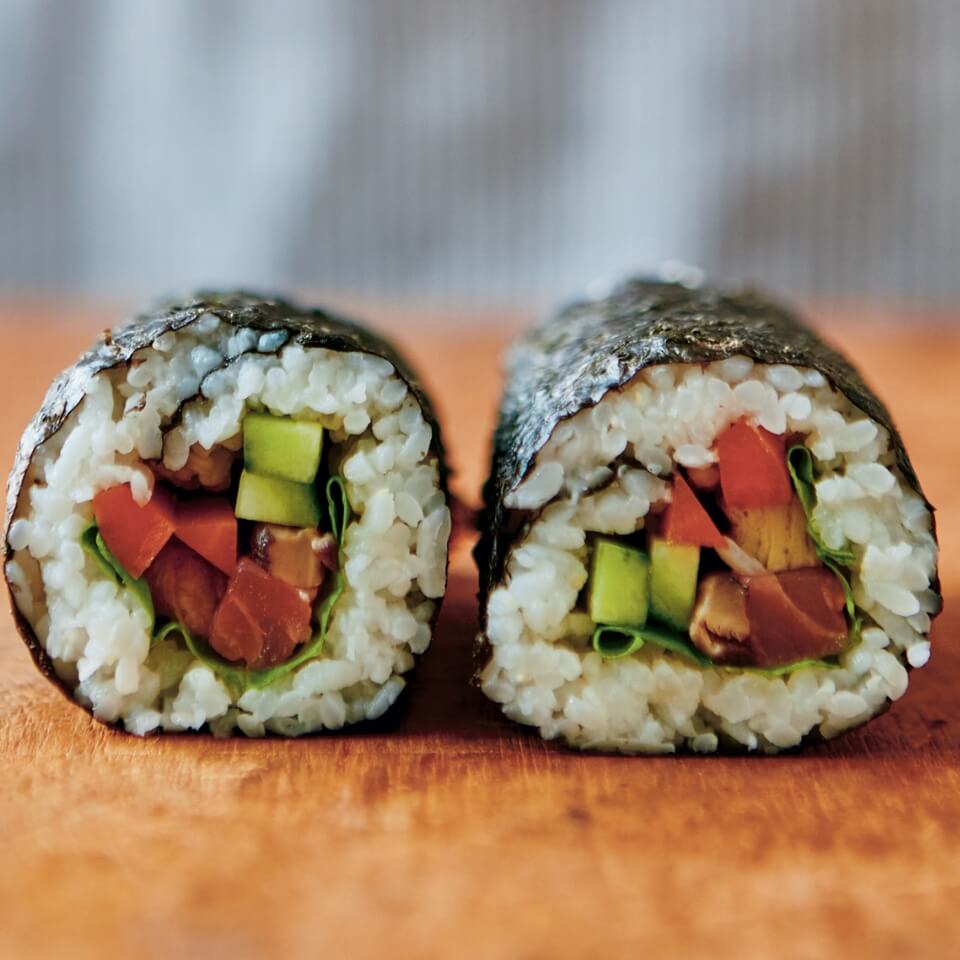
- Vegan fillings: Avocado, cucumber, carrot, or marinated tofu.
- Pickled ginger: Served between bites to cleanse the palate and reset your taste buds.
- Soy sauce & Wasabi: For dipping and heat.
-
Bamboo mat
-
sharp knife
-
sushi rice
-
nori sheets
-
vegan fillings
-
pickled ginger
-
soy sauce
-
wasabi
-
bowl of water
No comments yet. Be the first to share your thoughts!