

Get roll sushi right
Before you steam rice, clear your workspace and gather your tools. Sushi rolling relies on tension and temperature, not force. A messy station or warm rice turns a simple roll into a sticky mess.
You need a bamboo mat (makisu), a sharp knife, a small bowl of water, and nori sheets. If you lack a mat, a clean kitchen towel works as a substitute. The towel provides grip but requires more careful hand placement.
Rice temperature is the biggest variable. Sushi rice must be warm, not hot. Cold rice hardens and won't stick together. Hot rice burns your hands and makes the nori soggy. Aim for body temperature when you start rolling.
Keep a damp cloth nearby to wipe your hands between pieces. Sticky rice on your fingers ruins the texture of the next roll. A clean, dry surface for the mat and a sharp knife for clean cuts are non-negotiable.
-
Bamboo mat or clean kitchen towel
-
Sharp chef's knife or sushi knife
-
Small bowl of water with a splash of vinegar
-
Damp cloth for wiping hands
-
Sushi rice at body temperature
-
Nori sheets, shiny side down
Once your station is set and rice is ready, you can move to the actual rolling technique.
How to roll sushi step by step
Rolling sushi is a mechanical task. You are building a tight cylinder and cutting it cleanly. The process repeats the same motions for nigiri and maki, with the only real difference being how you shape the rice and nori.
Follow these steps to make your first roll. Keep your workspace dry. Wet hands prevent rice from sticking to your fingers, which is the most common reason for messy rolls.
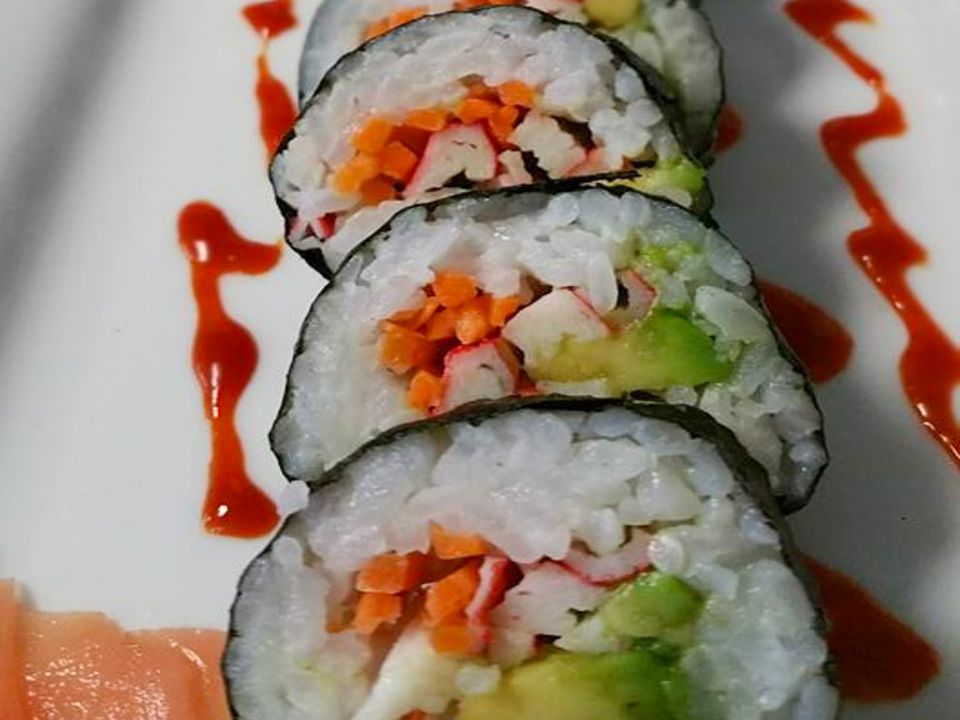
Cover your bamboo sushi mat (makisu) with plastic wrap. This prevents rice from getting stuck in the slats and makes cleanup instant. Place the mat on a clean, flat surface. If you do not have a mat, you can use a clean kitchen towel, but the bamboo mat provides the even pressure needed for a uniform cylinder.

Lay a sheet of nori on the mat. The shiny side must face down. The dull side is textured and grips the rice, while the shiny side is smooth and looks better on the outside of your roll. Align the nori so the top edge is slightly lower than the top of the mat, leaving about an inch of mat exposed at the top.
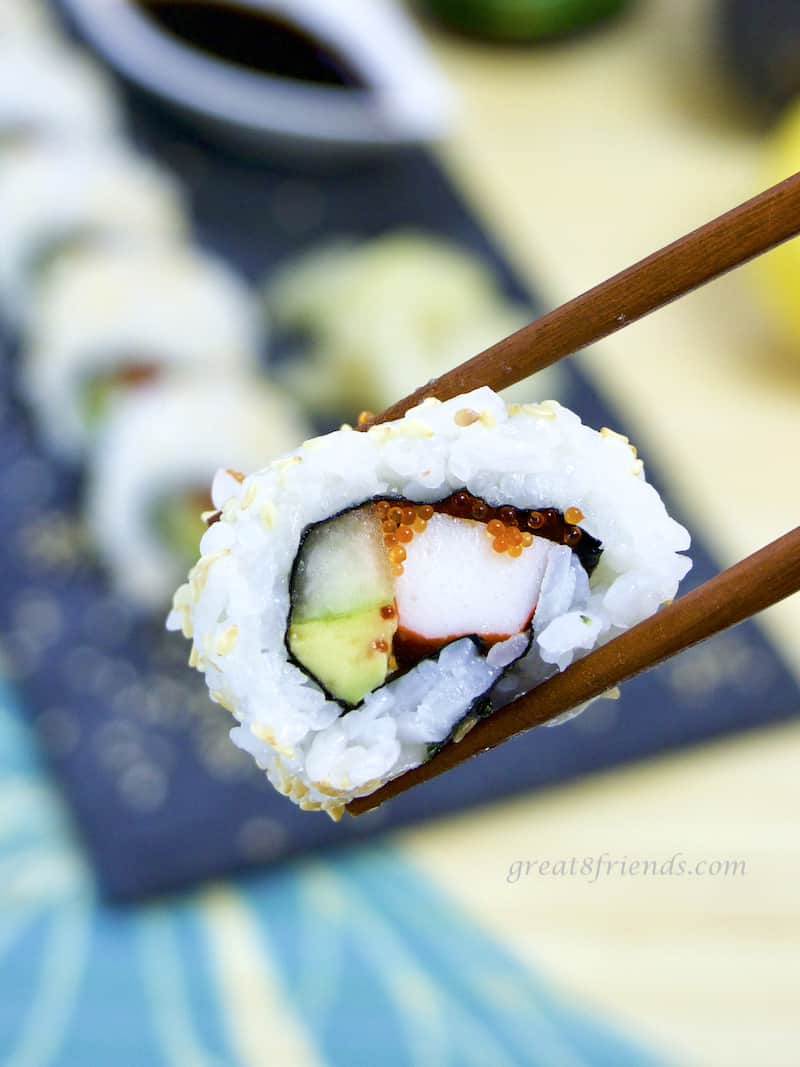
Wet your hands in a bowl of water mixed with a little vinegar. Take a ball of sushi rice and place it on the nori. Gently spread the rice across the sheet, leaving a one-inch strip of nori exposed at the top edge. Do not press hard; you want to keep the rice airy. Aim for a consistent thickness so the roll holds its shape when cut.
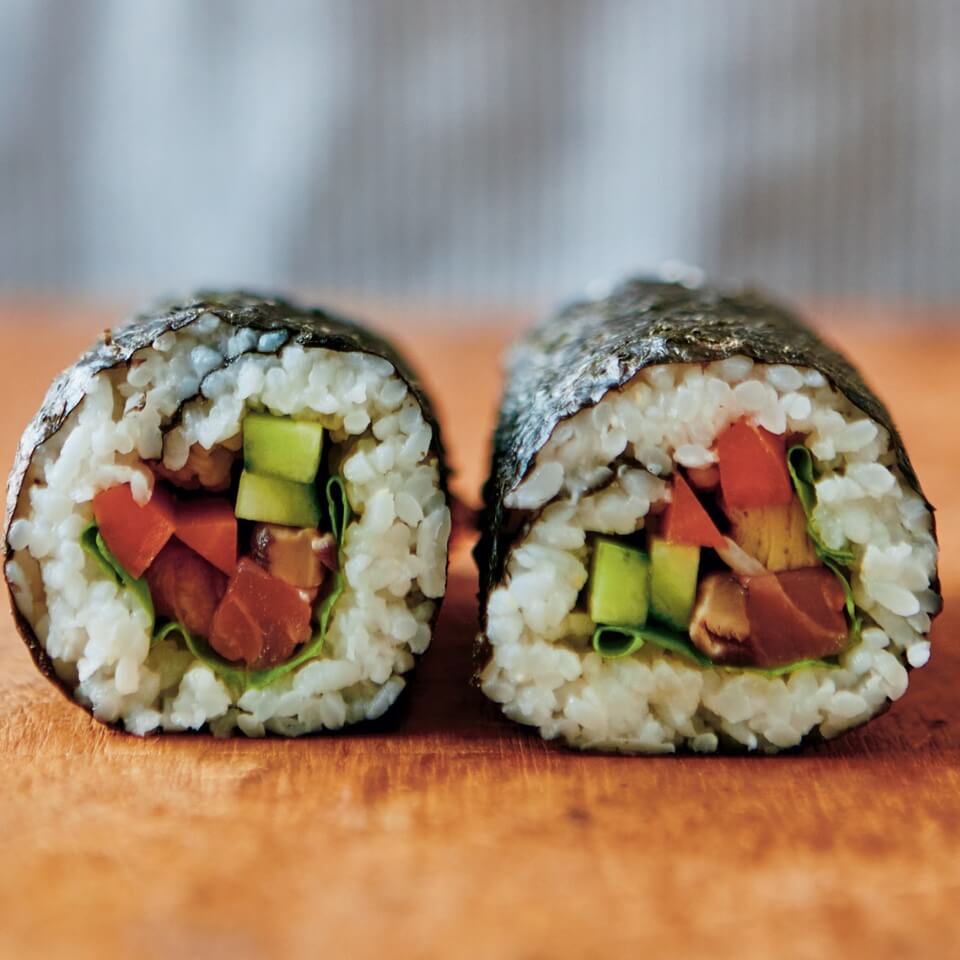
Place your fillings (cucumber, avocado, fish) in a line across the rice, slightly below the center. Lift the edge of the mat closest to you and roll it over the fillings. Tuck the fillings in tightly as you roll. Use the mat to squeeze the roll gently into a cylinder. Stop before the nori strip at the top covers the roll; this acts as a glue strip.
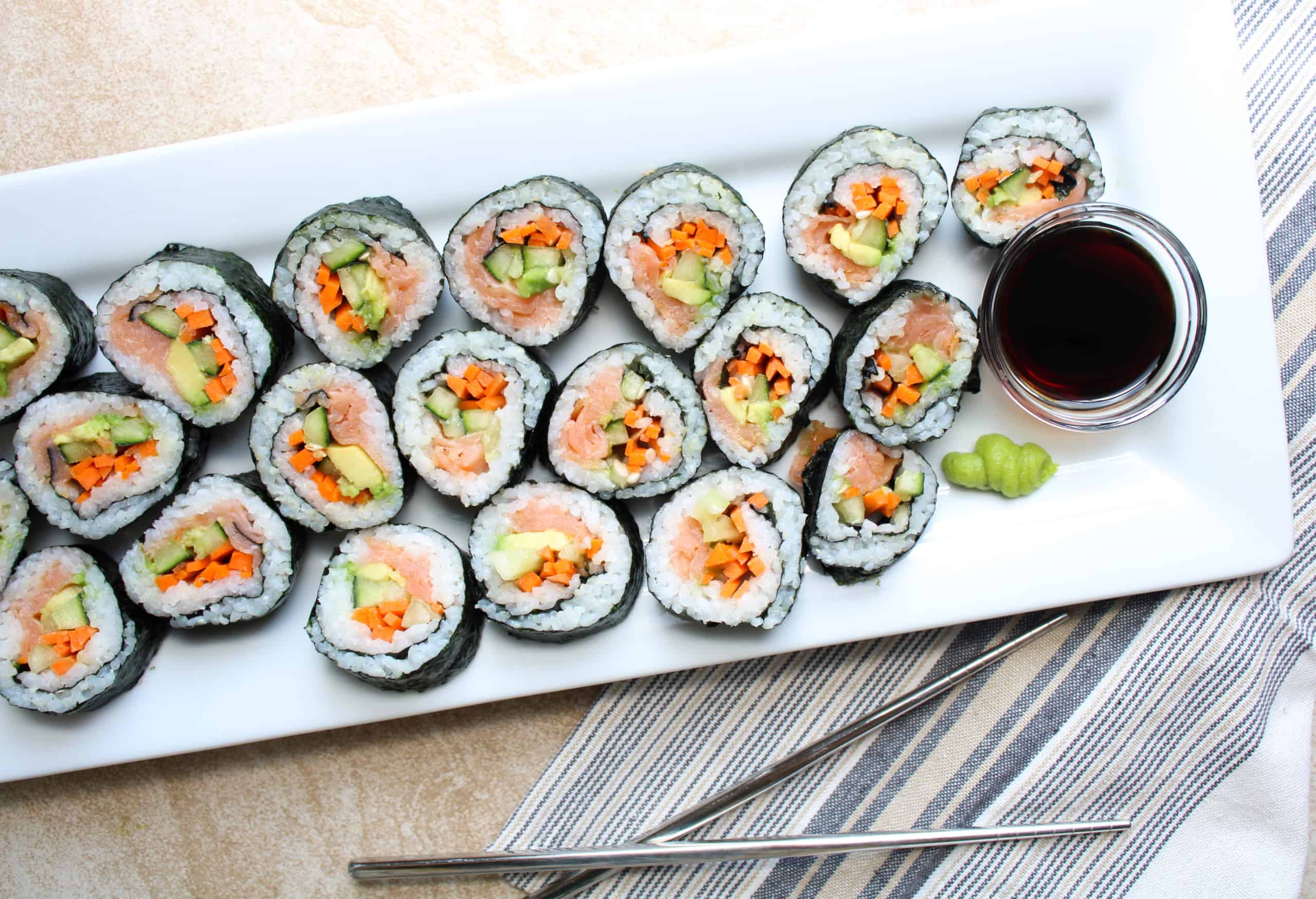
Press the exposed nori strip against the roll to seal it. Wet your knife blade with water before every cut. This prevents the rice from sticking to the steel. Slice the roll in half, then slice each half in half again. Wipe the blade clean between cuts for neat edges. If the roll falls apart, you did not roll it tight enough or used too much filling.
Quick checklist for your first roll
- Bamboo mat covered in plastic wrap.
- Nori placed shiny side down.
- One-inch strip of nori left bare at the top.
- Hands wet with vinegar water to prevent sticking.
- Knife blade wet before every single cut.
Common mistakes and fixes
If your roll is loose, you did not squeeze the mat hard enough during the rolling phase. The bamboo mat is designed to compress the rice; let it do the work. If your rice sticks to your hands, you are not wetting them enough. Keep a bowl of water nearby and dip your fingers frequently.
For nigiri, skip the mat. Take a small amount of rice, shape it into an oval in your palm, and press a slice of fish on top. The trick to both nigiri and maki is consistency in rice size and temperature. Sushi rice should be body temperature, not cold from the fridge.
Fix common mistakes
Even experienced home cooks run into the same issues when rolling sushi for the first time. These errors usually stem from rushing the process or misunderstanding how nori and rice interact. Addressing these specific pitfalls ensures your rolls hold together and taste right.
Rice is too wet or too dry
The rice must be sticky enough to adhere to the nori but firm enough to hold its shape. If it is too wet, the roll becomes a mushy mess that leaks through the bamboo mat. If it is too dry, the rice falls apart the moment you cut it.
Test the temperature and texture before spreading. The rice should be warm to the touch, not hot, and slightly tacky when pressed between your fingers. If it sticks excessively to your hands, dampen them with water and vinegar rather than adding more vinegar to the bowl.
Nori orientation is wrong
A common beginner error is placing the nori shiny side up. The shiny side is the side that faces the bamboo mat during rolling. Placing it face down ensures the matte side faces up, which helps the rice stick properly. If the shiny side is up, the rice will slide off as you roll.
Always verify the texture difference before placing the sheet on the mat. The matte side is rougher and absorbs moisture better, creating the necessary friction for a secure roll.
Rolling too tightly or too loosely
Squeeze the mat firmly to compact the ingredients, but do not crush them. Over-tightening results in a roll that is hard to cut and dense to eat. Under-tightening causes the roll to unravel during slicing.
Apply even pressure across the entire length of the roll. Start from the edge closest to you and roll forward with consistent tension. If the roll feels resistant, pause and adjust the ingredients rather than forcing the mat.
Knife technique causes tearing
Using a standard kitchen knife often squishes the roll. A sharp, long blade is essential for clean cuts. Dampen the blade with water before each slice to prevent rice from sticking.
Cut with a gentle sawing motion rather than pressing down. This preserves the structure of the roll and keeps the nori crisp. Wipe the blade clean between cuts to maintain precision.
Roll sushi: what to check next
Before you start rolling, it helps to clear up the common hurdles that make beginners give up. Here are the practical answers to the questions that come up most often when you’re trying to master nigiri and maki at home.
No comments yet. Be the first to share your thoughts!