

Start with simple nigiri
Building a sushi palate begins by removing the noise. Complex rolls with spicy mayo or avocado mask the natural flavor of the fish. Nigiri is the purest form because it isolates the relationship between the fish and the vinegar rice. This simplicity allows you to taste the subtle differences in texture, fat content, and sweetness that define high-quality sushi.
The tasting sequence
- Inspect the rice: Before tasting, look at the shari (sushi rice). It should be glossy and distinct, not mushy. The rice provides the acidic backbone that balances the fish.
- Dip fish-side down: If using soy sauce, dip only the fish side lightly. Soaking the rice ruins the texture and over-salts the bite.
- Eat in one bite: Nigiri is engineered to be consumed in a single mouthful. This ensures the rice and fish hit your palate simultaneously, as intended by the chef.
- Cleanse with ginger: Use pickled ginger between different types of fish, not as a garnish to eat with the sushi. This resets your taste buds for the next comparison.
Start with mild, lean white fish like halibut or fluke. These have delicate flavors that are easy to identify. Avoid starting with strong-tasting fish like mackerel or eel, which can overwhelm your initial tasting experience.

Notice the texture and fat content. Lean fish feel clean and crisp, while fatty fish like otoro tuna melt on the tongue. Pay attention to the natural sweetness or umami depth. This is where you begin to map your palate’s preferences.
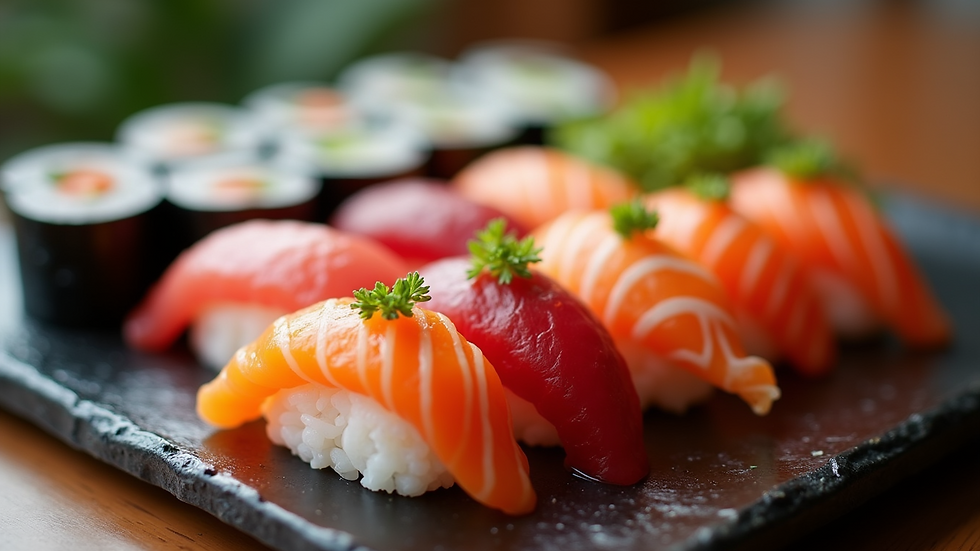
The rice is not just a base; it is an ingredient. Taste how the vinegar balances the fish’s richness. Good sushi rice is seasoned with a precise ratio of vinegar, sugar, and salt that enhances the fish without overpowering it.
As you progress, introduce slightly more complex fish like yellowtail (hamachi) or salmon. These offer a middle ground between lean and fatty profiles. By mastering these basics, you build the sensory vocabulary needed to navigate a full sushi menu.
Master the rolling technique
The physical act of rolling sushi is the first filter through which your palate perceives quality. A roll that is too tight forces you to chew through dense, compressed rice, masking the delicate texture of the fish. A roll that is too loose falls apart, leaving you with a mouthful of scattered ingredients rather than a unified bite. To build a refined sushi palate, you must understand how pressure and structure dictate flavor delivery.
The goal is a roll that holds its shape but yields easily to the teeth. This balance allows the vinegar in the rice and the oil in the fish to hit your tongue simultaneously, creating the intended harmony. Follow this four-step sequence to achieve that balance.
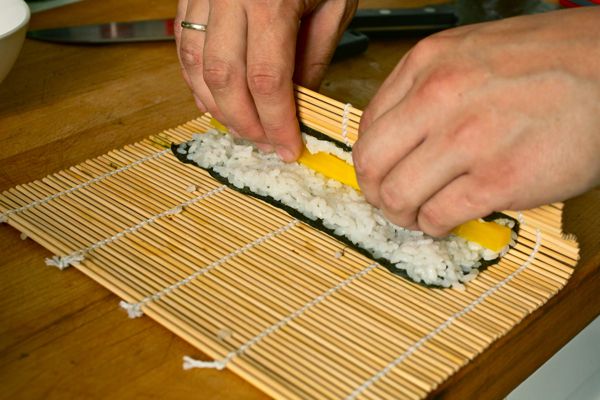
Place a sheet of nori on the bamboo mat, shiny side down. Spread a thin, even layer of sushi rice across the surface, leaving a one-inch strip of bare nori at the top edge. The rice layer should be thin enough that the nori is slightly visible through it. This thinness is critical; it ensures the nori provides a crisp snap rather than a chewy barrier when you bite through.
Place your fillings—such as tuna, cucumber, or avocado—in a single line across the center of the rice. Keep the line narrow. Overfilling is the most common mistake for beginners. A crowded roll requires excessive force to close, which squishes the rice grains and destroys their individual texture. Less filling allows the rice and nori to remain distinct and airy.
Lift the edge of the mat closest to you, using your thumbs to hold the fillings in place. Roll the nori over the fillings until the bare strip of nori at the top meets the rice. This first fold sets the internal structure. Apply only gentle pressure here; you are merely joining the edges, not compressing the ingredients yet.
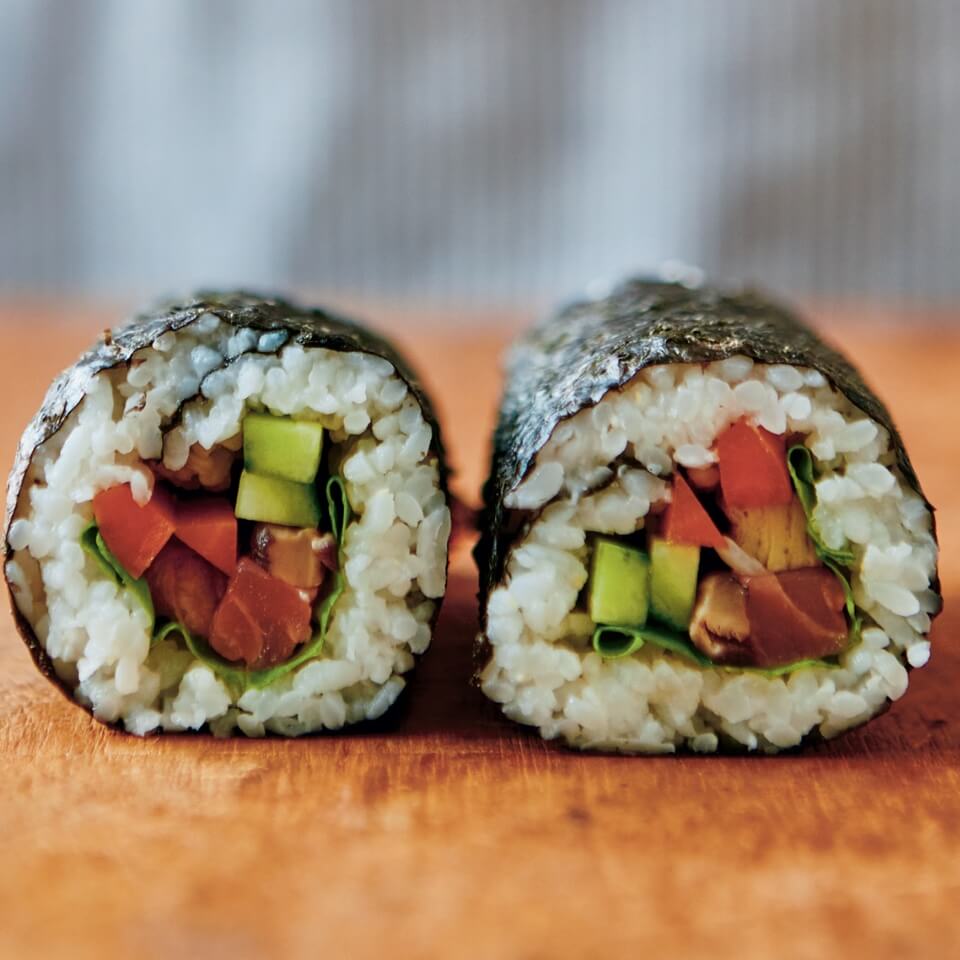
Once the seam is closed, use the mat to apply even pressure around the entire cylinder. Roll the mat back and forth slightly to square off the edges. The roll should feel firm but not hard. If it feels rock-solid, you compressed the rice too much. A properly rolled maki should have a slight give when pressed, ensuring a clean bite that releases flavor without resistance.
Pair drinks to refresh taste
Pairing drinks with sushi enhances the dining experience by cutting through richness and refreshing the palate. Sake, particularly Junmai or Ginjo varieties, complements the umami of fish without overpowering it. The amino acids in sake mirror the glutamates in sushi rice, creating a harmonious flavor profile. For non-alcoholic options, matcha tea or sparkling water with a twist of yuzu provides acidity that cleanses the palate between bites.
When selecting a beverage, consider the fat content of the fish. Leaner white fish pairs well with lighter, crisper sakes or teas, while fatty tuna or eel benefits from slightly sweeter or more robust sake to balance the oiliness. Avoid heavily sweetened cocktails or dark beers, which can clash with the delicate seasoning of the rice and mask the subtle flavors of the fish.
Avoid Common Tasting Mistakes
Even experienced sushi drinkers can dull their palate through habit. The goal is to taste the fish and rice exactly as the chef prepared them, not as you imagine they should taste. Small adjustments in how you handle soy sauce and ginger make a significant difference.
Drowning Rice in Soy Sauce
Many people dip their sushi upside down, submerging the rice into the soy sauce dish. This over-saturates the rice, causing it to fall apart and masking the delicate flavor of the fish with excessive salt. Instead, turn the piece sideways or flip it so only the fish touches the soy sauce. Dip lightly; the rice is already seasoned with vinegar and sugar.
Misusing the Pickled Ginger
The pickled ginger (gari) served with sushi is often misunderstood. It is a palate cleanser, not a condiment to eat with every piece. You should only use it between strong-flavored items, such as moving from fatty tuna to delicate white fish, or after eating eel. Eating ginger with every bite creates a constant sweet-and-sour interference pattern that prevents you from tasting the nuances of the nigiri.
Ignoring the Wasabi
Wasabi is often mixed into the soy sauce to create a green pool, which distributes the heat unevenly. Traditional sushi chefs place a small amount of wasabi directly on the fish before assembling the nigiri. If you are adding extra wasabi, place a tiny dab on the fish, not in the sauce. This preserves the sharp, clean heat of the wasabi without turning your soy sauce into a spicy dip.
Check your sushi quality
Knowing what to look for before the fish ever touches your tongue is the first step in evaluating quality. Freshness is not just a preference; it is the baseline for flavor. When you evaluate a piece, you are checking the integrity of the protein, the texture of the rice, and the balance of the seasoning. Use this visual and sensory checklist to ensure you are tasting the best possible product.
The visual and sensory checklist
- Fresh smell: High-quality fish should smell like the ocean or nothing at all. If it smells strongly of ammonia, fishiness, or sourness, the fish is past its prime. Fresh sashimi-grade tuna should have a clean, metallic scent.
- Firm texture: Press gently on the fish. It should spring back slightly. If it feels mushy, slimy, or leaves an indentation, the protein has broken down. The rice should hold its shape when picked up but yield easily to the tongue.
- Bright color: Look for vibrancy. Tuna should be a deep, translucent ruby red. Salmon should be a bright orange-pink. If the edges look brown, dull, or opaque, the fish has been exposed to oxygen for too long.
- Proper rice temperature: Good sushi rice is served at body temperature. If the rice is cold, the fats in the fish will not release their flavor properly. If it is too hot, it will cook the fish further and become sticky.
Look at the edge of the fish. It should be bright and translucent. Dull or brownish edges indicate oxidation and age.
The rice grains should be distinct and glossy, not mushy or clumped together. It should hold its shape without falling apart.
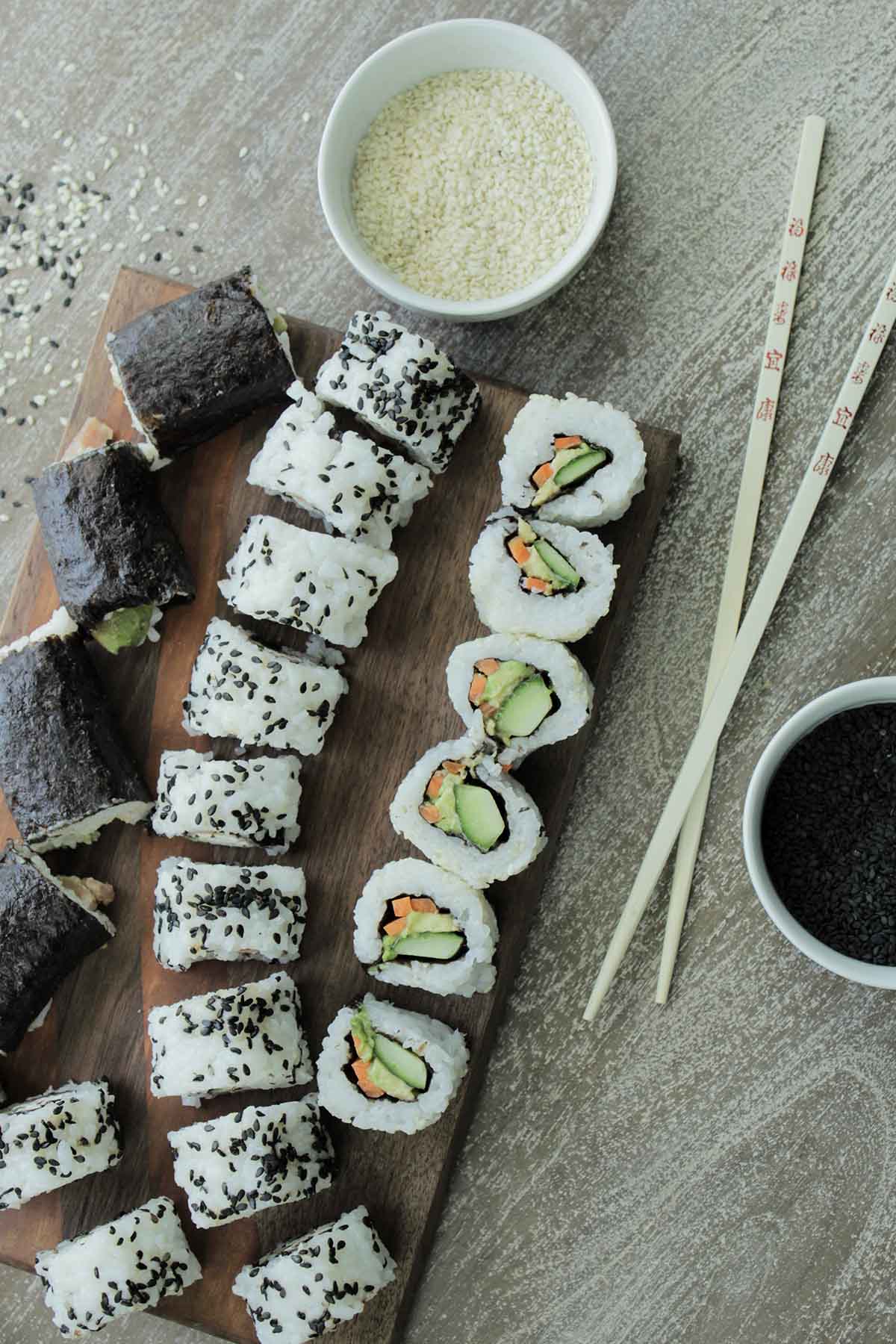
Bring the sushi close to your nose. It should smell clean and slightly sweet from the rice. Avoid any sour or overly fishy odors.
Watch a sushi rolling demo
Visualizing the technique bridges the gap between theory and practice. Watching a professional roll a sushi maki reveals the subtle wrist movements and pressure control that are difficult to describe in text alone. This visual reference helps you understand how to keep the nori intact while achieving a tight, uniform cylinder.
Use the video below to observe the rhythm of the process. Pay attention to how the chef handles the bamboo mat and where they apply final pressure to set the shape. Seeing the finished product against the rolling process clarifies the relationship between technique and the final presentation.
Frequently Asked Questions About Sushi Palates
Developing a sushi palate requires understanding how ingredients interact with your senses. Here are answers to common questions about etiquette and taste.
No comments yet. Be the first to share your thoughts!