

Choosing sustainable sushi ingredients
Building a refined sushi palate starts with the raw materials. You cannot taste nuance in fish that has been compromised by poor handling or overfishing. To move beyond basic rolls, you must learn to select ingredients that are both fresh and responsibly sourced. This approach ensures that every bite respects the ocean while delivering the clean, distinct flavors that define connoisseur-level sushi.
When selecting fish, look for certifications like the Marine Stewardship Council (MSC) label or ask your fishmonger about the catch method. These details matter because they indicate how the fish was harvested and handled before it reached your cutting board. Sustainable sourcing isn't just an ethical choice; it guarantees higher quality and better texture in your final roll.

Beyond the fish, the produce you choose plays an equally critical role. Avocados should yield slightly to pressure, nori must be crisp and dark green, and vegetables like cucumber should be firm and vibrant. These sensory checks help you identify quality before you even begin rolling. By prioritizing sustainable, high-quality ingredients, you lay the groundwork for a sushi experience that is both delicious and responsible.
Preparing Rice and Nori for Rolling
The foundation of any great sushi roll lies in the preparation of its two primary components: the rice and the nori. Getting the texture of the rice right ensures that your palate focuses on the quality of the fish and the balance of flavors, rather than fighting against sticky or dry grains. Similarly, treating nori with care prevents it from becoming soggy or brittle, preserving the crisp contrast that defines a well-constructed roll.
Seasoning the Sushi Rice
Start with short-grain Japanese rice, which provides the necessary stickiness for rolling. Wash the rice thoroughly in cold water until the runoff is clear; this removes excess starch that can make the final product gummy. Cook the rice with a precise water-to-rice ratio, typically 1:1.1, to achieve a tender yet firm bite.
Once cooked, transfer the hot rice to a wide wooden bowl or a large non-reactive container. While the rice is still warm, gently fold in a mixture of rice vinegar, sugar, and salt. The heat helps the rice absorb the seasoning evenly. Use a cutting motion with a rice paddle to avoid crushing the grains, ensuring each piece remains distinct. Allow the rice to cool to body temperature before rolling; this prevents the nori from steaming and becoming limp.
Preparing the Nori
Nori sheets are delicate and sensitive to humidity. Keep them sealed in their original packaging until the moment you are ready to roll. If the nori feels soft or pliable, it may have absorbed moisture from the air, which will compromise the structural integrity of your roll.
For a sharper texture, you can lightly toast the nori over a low flame or in a dry pan for just a few seconds on each side. This process enhances the umami flavor and adds a satisfying crunch. However, be careful not to over-toast, as burnt nori becomes bitter and difficult to roll. Cut the sheets in half if you are making smaller rolls, or keep them whole for standard maki.
The Rice and Nori Checklist
Use this quick checklist to ensure your components are ready for assembly:
- Wash rice until water runs clear to remove excess starch.
- Cook with a 1:1.1 water-to-rice ratio for optimal texture.
- Season rice with vinegar mixture while it is still hot.
- Cool rice to body temperature before handling.
- Keep nori sealed until ready to use to maintain crispness.
- Lightly toast nori if a crunchier texture is desired.
Rolling techniques for perfect sushi
Building a refined sushi palate begins with the roll itself. A well-constructed maki roll holds its shape, revealing a clean cross-section that highlights the quality of the ingredients. The goal is not just to wrap rice and fish, but to create a balanced bite where the nori provides structure and the fillings remain distinct.
The foundation of any good roll is the bamboo mat, or makisu. To prevent the sticky sushi rice from adhering to the wood, you must prepare the mat correctly. Drape a sheet of plastic wrap over the mat, ensuring it covers the slats completely. This barrier allows the roll to slide off easily once formed, preserving the integrity of the exterior nori. Some traditionalists prefer wetting the mat instead, but plastic wrap offers greater control for beginners.
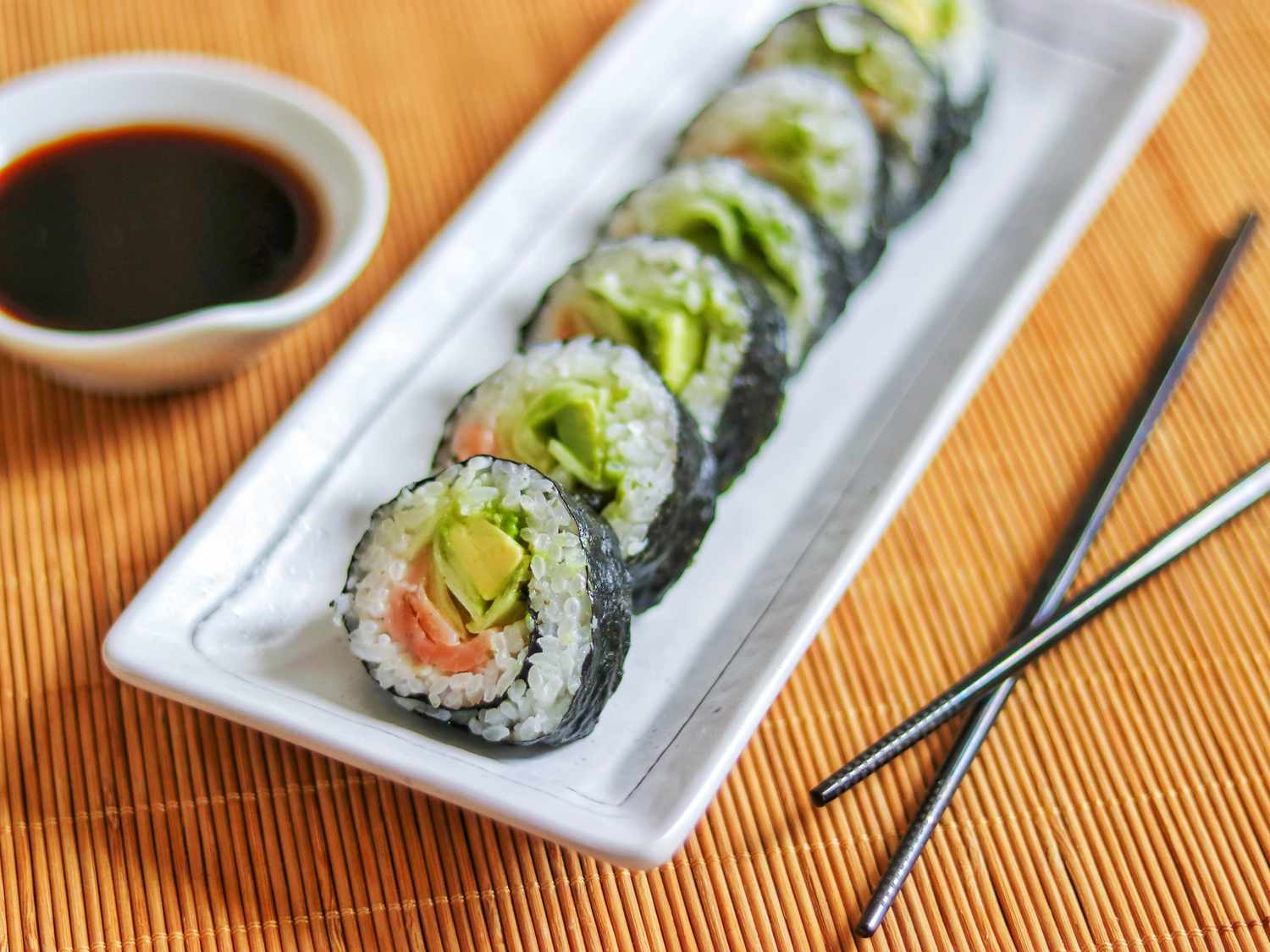
Place a sheet of nori on the plastic-wrapped mat, shiny side down. Spread a thin, even layer of sushi rice over the top two-thirds of the sheet. Leave a one-inch strip of bare nori at the top edge; this acts as the seal for the roll. Use wet fingers to prevent sticking while pressing the rice gently into the nori.

Place your fillings—such as cucumber, avocado, or tuna—in a horizontal line across the center of the rice. Keep the pile low and narrow. Overfilling is the most common mistake; it forces the roll to burst open or prevents the bamboo mat from applying even pressure.

Lift the bottom edge of the mat and the nori together, folding it over the fillings. Tuck the nori edge under the rice and fillings, applying firm but gentle pressure. As you roll forward, use your thumbs to hold the fillings in place while your fingers guide the mat. The roll should be tight enough to hold its shape but not so tight that the rice cracks.

Once the roll is complete, use the mat to squeeze it into a uniform cylinder. Apply pressure along the sides and top to flatten any irregularities. Lift the mat away, then brush the exposed one-inch strip of nori with a little water to activate the starch. Finish the roll by pressing the wet nori edge firmly against the body of the sushi to seal it.
The quality of your sushi palate is tested by how well the roll holds together. A clean cut reveals the alignment of ingredients, while a tight roll ensures that each bite has the correct ratio of rice, nori, and filling. Practice this tension and alignment to elevate your rolling skills from home cook to connoisseur.
Taste the Nuances of Your Sushi Palate
Sushi is not just about the rice or the fish; it is a balance of textures, temperatures, and subtle flavors. To truly appreciate what you have rolled, you need to engage your senses actively. Start by observing the piece. The rice should hold its shape but yield gently to the touch, while the fish should look vibrant and moist. This visual check sets the stage for the flavor profile you are about to experience.
When you take your first bite, let the ingredients rest on your tongue for a moment before chewing. Notice the interplay between the acidity of the vinegar rice and the natural sweetness or umami of the topping. A well-made piece should feel cohesive, not disjointed. If you are trying a new type of fish or a different roll style, pause to identify the primary notes before moving on.
To maintain a clear palate throughout your meal, use the ginger strategically. Take a small piece between bites, especially when switching from rich, fatty fish like toro to lighter options like white fish or vegetable rolls. This prevents flavors from muddying each other and allows you to detect the distinct characteristics of each piece. If you prefer a drink to aid this process, a light, crisp Japanese highball can refresh your palate without overpowering your taste buds, much like the ginger does.
By slowing down and focusing on these details, you transform sushi from a quick meal into a mindful experience. You will begin to notice the quality of the ingredients and the skill involved in the preparation, deepening your appreciation for the craft.
Frequently asked questions about sushi
Building a refined sushi palate involves more than just eating; it requires understanding the tools, timing, and traditions that define the experience. These practical questions address common hurdles in preparation and consumption, helping you move from novice to confident appreciator.
No comments yet. Be the first to share your thoughts!