

The ocean can't keep up
Bluefin tuna, eel, and salmon are disappearing. Decades of global demand have pushed these species toward collapse, while the bycatch from traditional netting kills off everything else in the vicinity. I love sushi, but we have to admit the current supply chain is broken.
The environmental impact extends beyond the fish themselves. Long-distance transportation of delicate seafood contributes heavily to carbon emissions, and many traditional fishing practices damage fragile marine ecosystems. While organizations like the Marine Stewardship Council (MSC) offer certifications for sustainably sourced seafood, these aren’t foolproof. MSC certification, for example, relies on assessments of individual fisheries, and enforcement can be challenging. Plus, it doesn’t address the inherent limitations of even well-managed wild fisheries.
The situation with eel is particularly dire. European eel, a common ingredient in unagi, is critically endangered, and much of the supply relies on glass eels caught in the wild and raised in aquaculture. This aquaculture, while reducing pressure on wild populations, still has its own environmental concerns. The demand simply outstrips the ability of the ocean to replenish these resources at a sustainable rate. We need to seriously consider alternatives if we want to continue enjoying sushi for generations to come.
This is where the idea of lab-grown, or cultured seafood, enters the conversation. It’s not a simple solution, but it’s a promising avenue for addressing the sustainability challenges facing the sushi we love. It’s a radical shift, certainly, but the urgency of the situation demands that we explore every viable option.
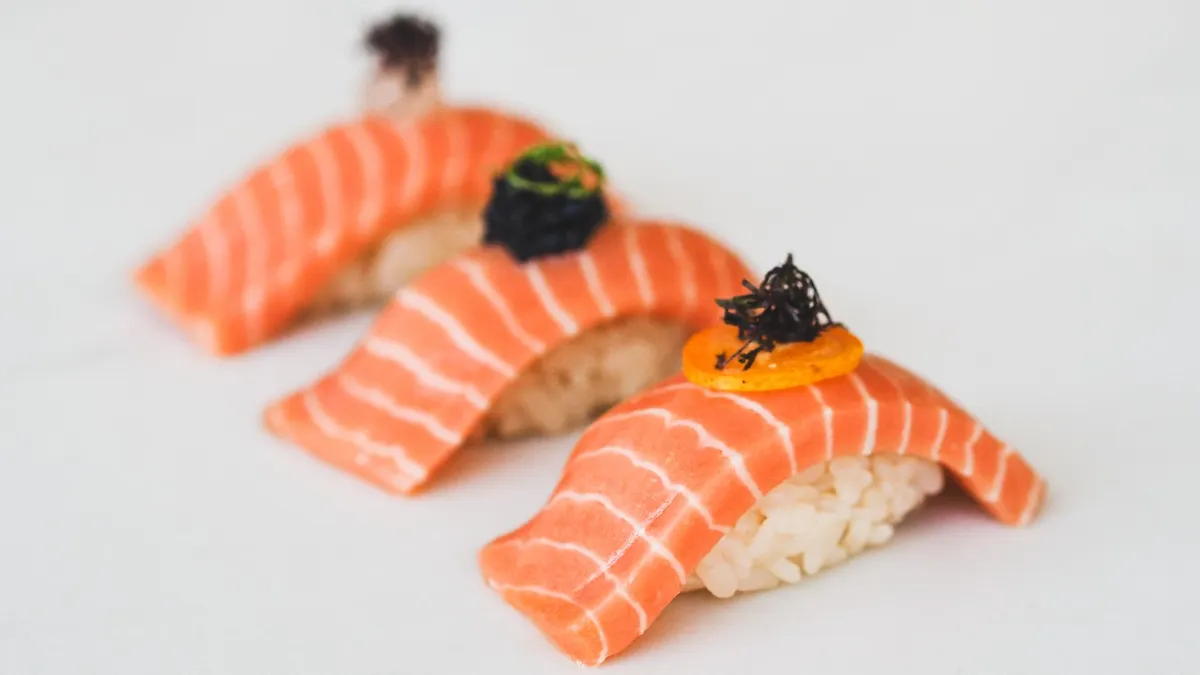
How to grow a tuna roll
Cultured seafood, also known as cell-based seafood, is produced by growing fish cells directly, without raising and harvesting actual fish. It’s a form of cellular agriculture, similar to how cultured meat is made. The process begins with a small sample of cells taken from a fish – this could be a muscle cell, for example. These cells are then placed in a bioreactor, a controlled environment that provides the necessary nutrients, temperature, and other conditions for them to grow and multiply.
The process is closer to brewing beer than traditional farming. Instead of yeast, technicians grow fish cells in a bioreactor. These cells multiply into muscle tissue that can be sliced for nigiri. This isn't genetic modification; the DNA stays the same, it just grows in a stainless steel tank instead of the ocean.
This differs significantly from the growing market of plant-based seafood alternatives. Products like vegan tuna rolls use plants – often soy or konjac – to mimic the taste and texture of fish. Cultured seafood is fish, just produced in a different way. While plant-based options have a role to play, cultured seafood aims to replicate the real thing at a cellular level, potentially offering a more authentic sushi experience.
The legal hurdle
The regulatory landscape for cultured seafood in the United States is still developing, but the Food and Drug Administration (FDA) and the United States Department of Agriculture (USDA) are taking the lead. In November 2023, the FDA announced that lab-grown salmon was safe to eat, marking a significant milestone. This approval was based on extensive safety evaluations and a determination that the product is as safe as conventionally harvested salmon.
The FDA and USDA issued a joint statement in 2023 outlining their framework for regulating cultured seafood. Currently, the FDA oversees the cell collection, cell banking, and cell differentiation processes, while the USDA’s Food Safety and Inspection Service (FSIS) regulates the harvesting, processing, and labeling of the final product. Companies must demonstrate that their products are safe, properly labeled, and don’t pose a risk to public health.
The approval process isn’t straightforward. Companies need to provide detailed data on their cell lines, production processes, and product composition. They also need to demonstrate that their facilities meet rigorous hygiene and safety standards. It’s not a "wild west’ situation, but it"s a new field, and the regulations are still evolving. The FDA is actively working to refine its guidance based on new scientific information and industry developments.
Internationally, the regulatory picture is varied. Singapore has already approved the sale of cultured meat, including seafood, and Japan is investing heavily in cellular agriculture research. The European Union is taking a more cautious approach, with ongoing debates about labeling and safety regulations. Each country is navigating its own path, considering both the potential benefits and the potential risks.
- The FDA handles cell collection and banking.
- The USDA-FSIS manages the harvesting and labeling of the final cuts.
- International Regulations: Vary significantly by country (Singapore is most progressive, EU is more cautious).
Regulatory Landscape for Cultured Seafood (as of late 2023/early 2024)
| Country | Regulatory Body | Approval Status | Key Requirements | Notable Considerations |
|---|---|---|---|---|
| United States | Food and Drug Administration (FDA) & USDA | Under Review | Pre-market consultation with FDA required for human food made with cultured animal cells. Facilities must meet food safety standards. USDA jurisdiction applies if the product involves livestock. | FDA and USDA are collaborating on a framework; focus is on safety, labeling, and traceability. No specific approval pathway fully established as of early 2024. |
| European Union | European Food Safety Authority (EFSA) & National Competent Authorities | Under Review | Novel Food Regulation applies. Requires pre-market authorization based on safety assessment by EFSA. Member states have varying interpretations and implementation approaches. | The EU's Novel Food Regulation is broad and requires extensive data submission. Harmonization across member states is a challenge. |
| Japan | Ministry of Health, Labour and Welfare (MHLW) | No Framework | Currently, no specific regulatory framework exists for cultured seafood. Assessment will likely be based on existing food safety laws, potentially requiring case-by-case evaluation. | Japan has a strong tradition of seafood consumption and a cautious approach to novel foods. Public acceptance will be a key factor. |
| Singapore | Singapore Food Agency (SFA) | Approved (Limited) | Requires safety assessment and approval from SFA. Focus on demonstrating safety and nutritional equivalence to conventional seafood. First country to approve sale of cultured meat (including seafood). | Singapore has proactively established a regulatory framework to encourage innovation in alternative proteins. Approval is product-specific. |
| Canada | Health Canada & Canadian Food Inspection Agency (CFIA) | Under Review | Requires pre-market assessment under the Food and Drugs Act and Regulations. CFIA oversees the safety and labeling of food products. | Canada is developing a regulatory approach in line with international standards, focusing on safety and transparency. |
| Australia & New Zealand | Food Standards Australia New Zealand (FSANZ) | Under Review | Requires pre-market assessment and approval based on the FSANZ Act and Standards. Focus on food safety and public health. | FSANZ is considering a risk-based approach to regulating cultured seafood, taking into account potential benefits and risks. |
Illustrative comparison based on the article research brief. Verify current pricing, limits, and product details in the official docs before relying on it.
Companies Leading the Charge
Several companies are at the forefront of the cultured seafood revolution, with a growing number specifically targeting species popular in sushi. Finless Foods, based in Emeryville, California, is focused on bluefin tuna, a species facing severe overfishing. They’ve made significant progress in scaling up production and have received positive feedback from early taste tests.
Wildtype, based in San Francisco, is dedicated to cultured salmon. They’ve raised over $100 million in funding and are building a pilot production facility to increase output. Wildtype aims to offer a salmon product that not only tastes like the real thing but also has a similar nutritional profile. They've partnered with chefs to refine their product and gather feedback.
BlueNalu, another US-based company, is taking a broader approach, working on a range of species including bluefin tuna, yellowtail, and mahi-mahi. They’ve focused on creating whole muscle cuts of fish, aiming to replicate the texture and appearance of traditional sushi-grade fish. They’ve secured partnerships with several seafood distributors.
Shiok Meats, based in Singapore, is focusing on crustaceans like shrimp and crab, which are also popular in sushi. Their unique approach involves growing muscle cells and other tissues to create a complete seafood product. They’ve received significant investment from venture capital firms in Asia. These companies are all navigating the challenges of scaling up production and reducing costs, but they are making steady progress.
The funding landscape is evolving. While early investment was largely driven by venture capital, we’re now seeing increased interest from traditional food companies and government grants. Partnerships are also crucial. Companies are collaborating with seafood processors, chefs, and retailers to accelerate the development and commercialization of cultured seafood.
Will it Taste Like the Real Thing?
This is the million-dollar question. Replicating the complex flavor profiles and textures of different fish species is a significant challenge. Fish flavor isn’t just about the muscle tissue; it’s influenced by the fish’s diet, environment, and even its genetics. Capturing that nuance in a lab setting is incredibly difficult.
Companies are employing several strategies to overcome these challenges. They’re experimenting with different cell types, growth media, and bioreactor conditions to optimize flavor and texture. Some are also exploring the use of plant-based fats to mimic the richness of fish oil. The goal is to create a product that is indistinguishable from conventionally harvested fish.
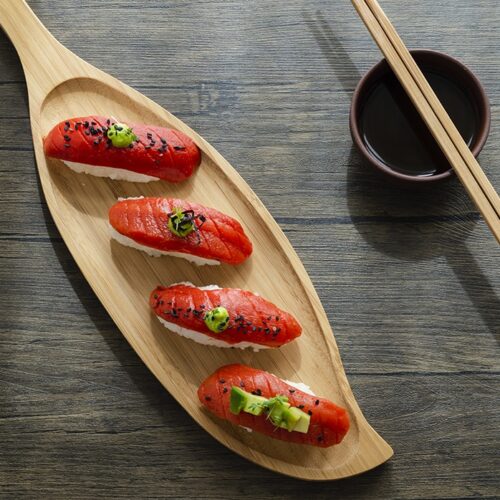
Early samples of cultured salmon and tuna are close, but they aren't perfect. I'm not sure if a lab can ever truly replicate the exact fat marbling of a wild bluefin, though the gap is closing fast.
Consumer acceptance will ultimately depend on whether these products can deliver on taste and texture. It’s also important to manage expectations. Cultured seafood isn’t necessarily intended to be a perfect replica, but rather a sustainable and ethical alternative that offers a similar culinary experience.
The 2026 price tag
Currently, cultured seafood is expensive to produce. The cost of growth media, bioreactors, and skilled labor all contribute to high production costs. As of late 2023, a single fillet of cultured salmon could cost upwards of $50. However, companies are working to reduce these costs through process optimization and economies of scale.
Looking ahead to 2026, widespread availability in restaurants and stores is still unlikely, but limited availability in select markets is plausible. Initial rollouts will likely focus on high-end sushi restaurants in major cities, where consumers are more willing to pay a premium for sustainable options. Expect to see it as a special or limited-time offering.
Price parity with traditional sushi is a long-term goal. Experts predict that as production scales up and technology improves, the cost of cultured seafood could eventually fall below that of wild-caught fish. This will depend on factors like regulatory approval, consumer demand, and ongoing investment in the industry.
Logistical challenges remain. Establishing a reliable supply chain for growth media and ensuring consistent product quality will be crucial. Distribution networks will need to be developed to transport cultured seafood from production facilities to restaurants and retailers. It’s a complex undertaking, but one that companies are actively addressing.
Sushi Chef Reactions
The response from sushi chefs has been mixed. Some are cautiously optimistic, recognizing the potential benefits of a sustainable alternative. Others are skeptical, concerned about the impact on tradition and the authenticity of the sushi experience. Many chefs emphasize the importance of shokunin, the dedication to mastering a craft, and worry that lab-grown fish might not meet their standards.
Early reports from chefs who have sampled lab-grown fish suggest that the texture is often promising, but the flavor can be lacking. Some have noted that the fish lacks the umami – the savory depth – of wild-caught fish. However, they also acknowledge that the technology is still evolving and that improvements are being made.
There's a clear divide between chefs who prioritize sustainability and those who prioritize tradition. Younger chefs tend to be more open to experimentation, while more established chefs are more resistant to change. The willingness to incorporate cultured seafood into menus will likely depend on individual chefs’ values and their customers’ preferences.
Ultimately, the success of cultured seafood will hinge on its ability to win over the culinary community. If chefs embrace it and are able to create delicious and innovative sushi dishes, it has a chance to become a mainstream ingredient. But if it fails to meet their standards, it may remain a niche product.
No comments yet. Be the first to share your thoughts!